Table of Contents

Here’s a guide on when to steam, iron, wash, spot clean, or dry clean your clothes.
Decision Chart
Situation | Best Method | Why |
Slightly wrinkled, otherwise clean, casual fabric | Steam | Wrinkles alone don’t require water or heat pressure |
Wrinkled, needs a sharp crease or collar | Iron or steam iron | Only direct pressure lays down a true crease |
Visibly dirty or worn, care label allows water | Wash | Soil and odor need water and detergent, not just heat |
One isolated stain, garment otherwise clean | Spot clean | Washing the whole garment for one spot adds unnecessary wear |
“Dry clean only” label, structured or delicate construction | Dry clean | Solvent cleaning protects linings, adhesives, and structure that water would damage |
Reading the Care Label Fast
Care labels use five base shapes under the international ISO 3758 / GINETEX system: a wash tub for washing, a triangle for bleaching, a square for drying, an iron for ironing, and a circle for professional cleaning, which covers both dry cleaning and wet cleaning.
An X through any of these means don’t use that process at all. Numbers inside the wash tub show the maximum wash temperature in Celsius. Dots inside the iron symbol set the maximum iron temperature, and more dots mean more heat. US labels use dots in the wash tub instead of numbers.
US labels follow a different rule. The FTC lets brands use written care instructions or ASTM care symbols in place of words, per the FTC’s Care Labeling Rule guidance.
When Steam Is Enough
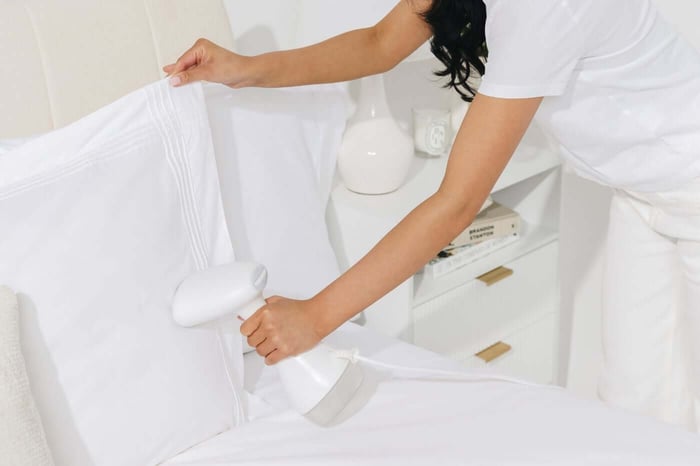
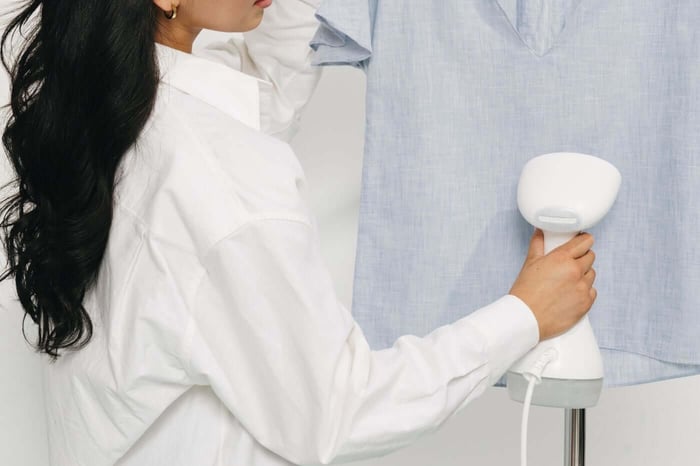
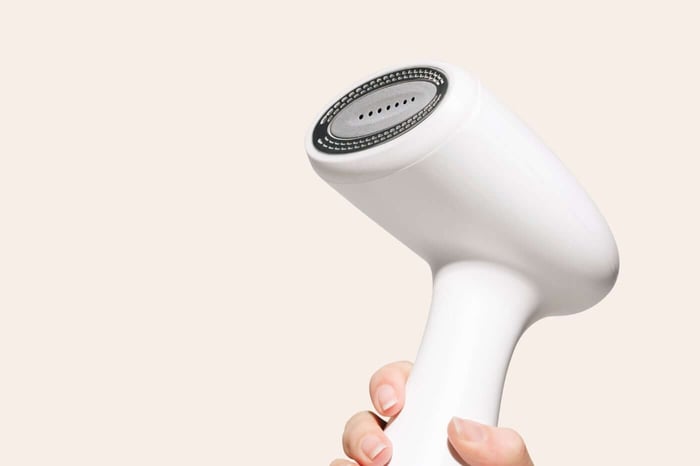
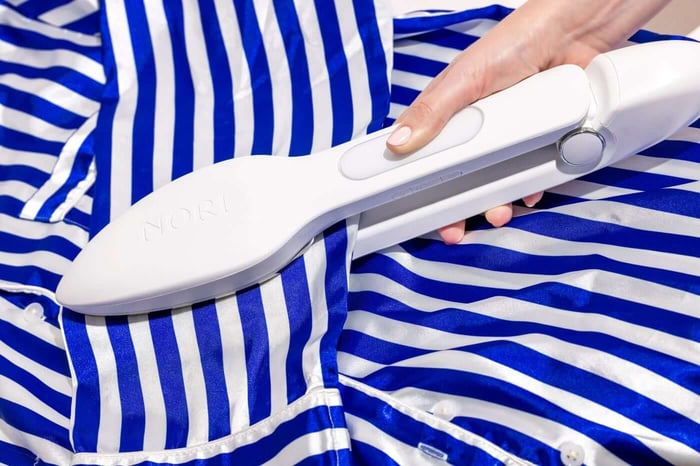
If a garment looks fine except for travel or storage wrinkles, and the fabric isn’t visibly soiled, steam alone solves it without the wear and tear of a full wash cycle. This covers most of what a wardrobe actually needs day to day.
Our decision guide on whether you need both a steamer and an iron breaks down which wrinkle problems steam alone can’t fix.

When You Need an Iron
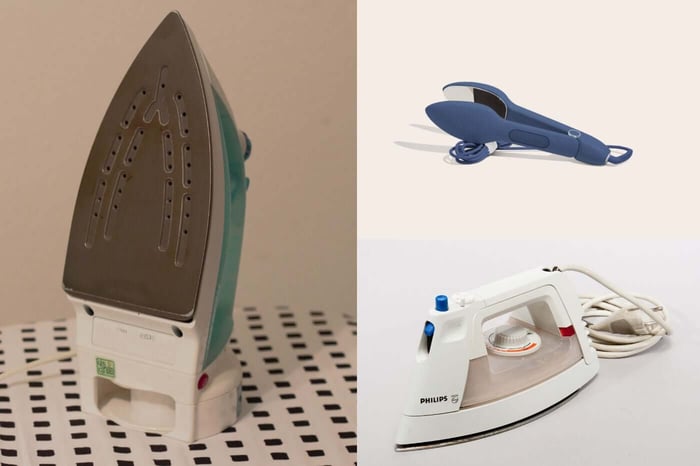
A sharp trouser crease, a stiff collar, or pressed pleats need direct pressure, something steam alone doesn’t provide. Our iron vs. steamer vs. steam iron guide covers exactly what separates these two processes mechanically.
When to Spot Clean Instead of Washing
A single stain on an otherwise clean garment rarely needs a full wash cycle. Blotting (never rubbing) the spot immediately, then treating it based on stain type, addresses the problem without subjecting the rest of the garment to unnecessary washing and drying wear.
When Dry Cleaning Is Worth It
A “dry clean only” label exists because water and heat would damage the garment’s structure, lining, or embellishments, not because dry cleaning is inherently superior.
Structured blazers, beaded formal wear, and pieces with fused interfacing are the categories where dry cleaning genuinely protects the garment rather than being a precaution.
FAQs
Can you steam a garment that says “dry clean only”?
Sometimes, cautiously, for light wrinkle removal, but the “dry clean only” label typically covers structural concerns; steam doesn’t create the same risk as washing does. When in doubt, test an inside seam first or default to the label’s instruction.
Is spot cleaning as effective as washing the whole garment?
Yes, for an isolated, freshly treated stain. Spot cleaning targets the actual problem without subjecting the rest of the garment to the wear a full wash cycle adds.
Does ironing work on every fabric that steam works on?
No. Fabrics like leather, suede, sequined pieces, and some structured linings tolerate steam poorly or not at all, and direct ironing pressure makes that risk worse, not better. Our fabric-by-fabric safety guide covers exactly which fabrics fall into this category.