Table of Contents
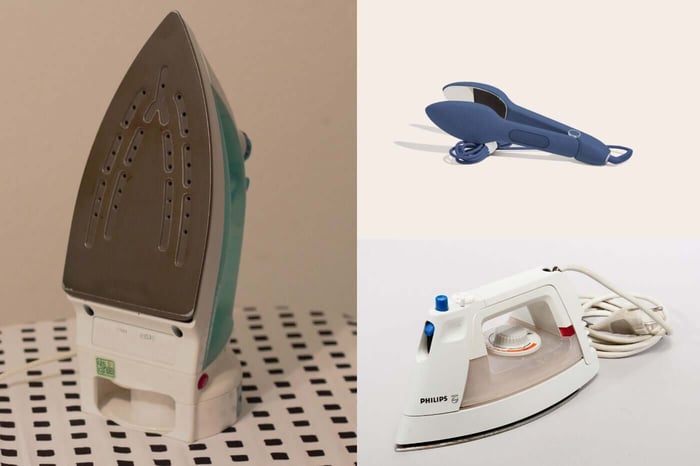 An iron presses fabric with a flat, heated metal plate and direct pressure. A steamer releases wrinkles with hot vapor and never touches the fabric directly. A steam iron is a regular iron with a built-in steam function, so it still presses with a hot plate but adds moisture to speed up the process.
All three remove wrinkles. They just get there in different ways, and that difference decides which one belongs in your routine.
The Three Tools, Defined
A dry iron uses a flat soleplate heated up to about 390°F to press wrinkles flat through direct heat and pressure. Care labels cap iron temperatures at 230°F, 302°F, or 392°F depending on the fabric, under the GINETEX care symbol system. Irons need an ironing board for the flat, stable surface pressing depends on.
A steam iron is a dry iron with a steam function added, most of what’s sold as “an iron” today. The plate still presses fabric with direct heat and pressure. The steam just loosens fibers first so the press does less work.
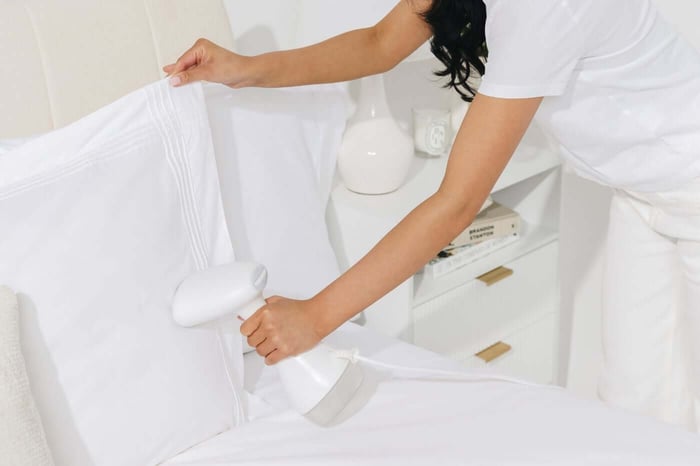
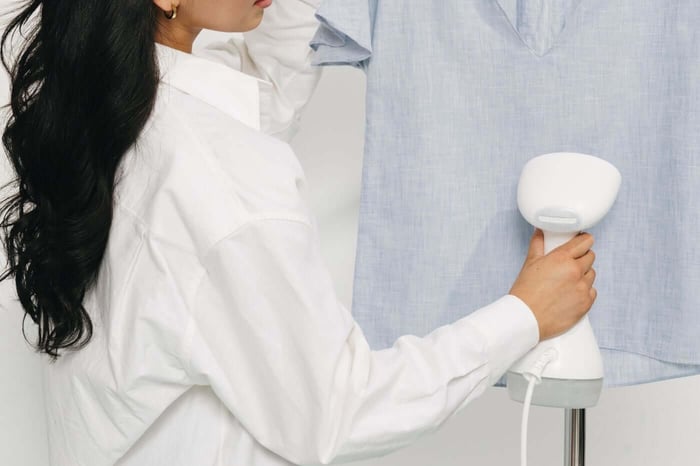
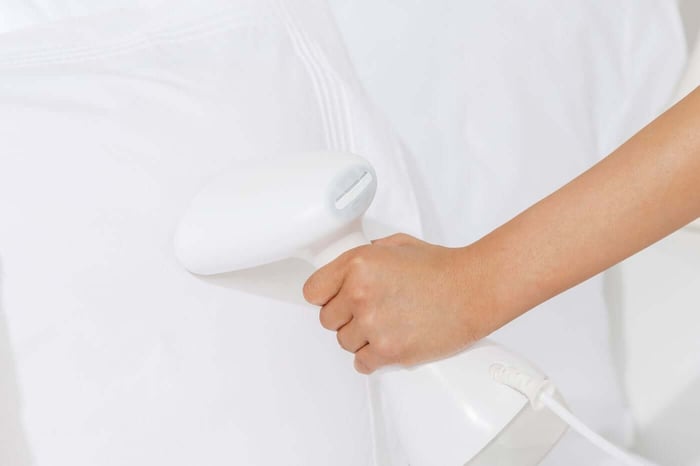
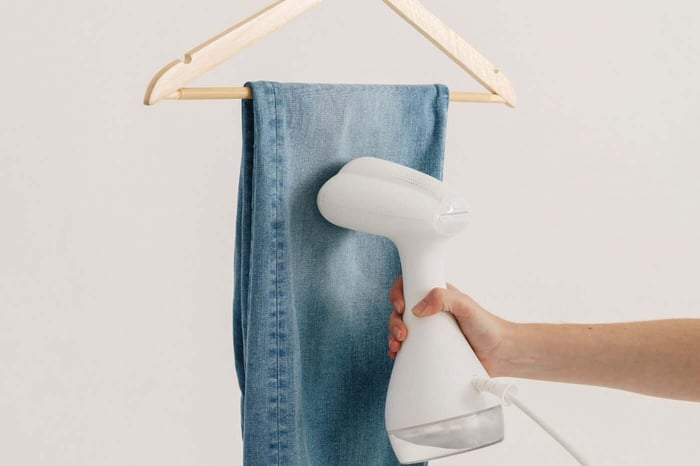
A garment steamer heats water into vapor and directs it at hanging or flat fabric with no plate contact at all. Steamers don’t press against the fabric the way irons do, which is why they handle delicate materials like silk and cashmere with far less risk of scorching or shine. Steamers need no ironing board.
Quick Decision Tree
Do you need a sharp, pressed crease (trousers, a stiff collar, pleats)? → You need direct pressure. Choose an iron or steam iron.
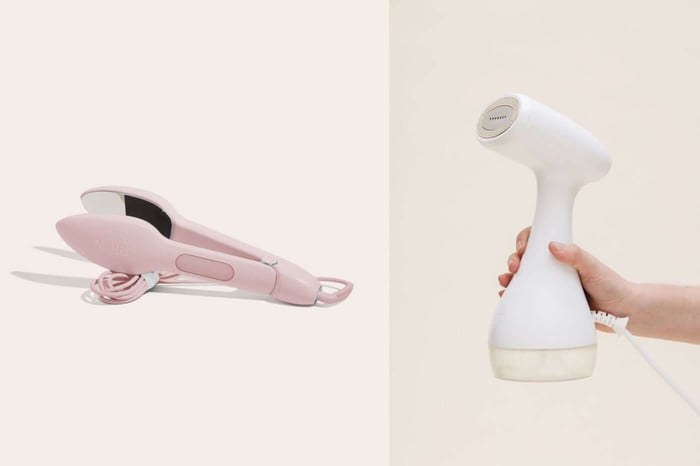
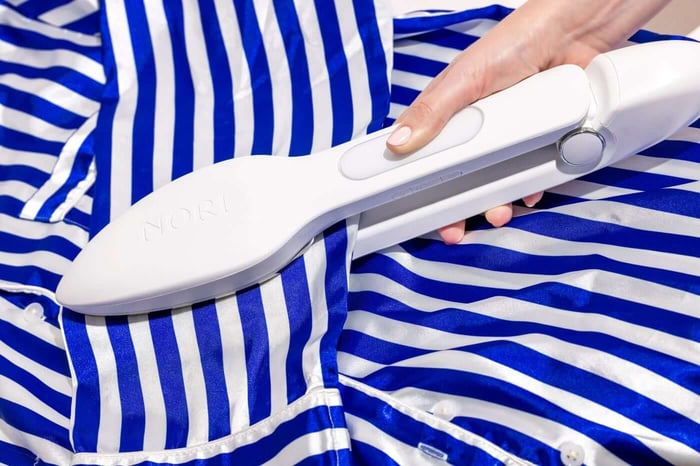
Do you want to skip the ironing board and setup entirely? → Choose a steamer, or a 3-in-1 device like the Nori Press that presses without needing a board.
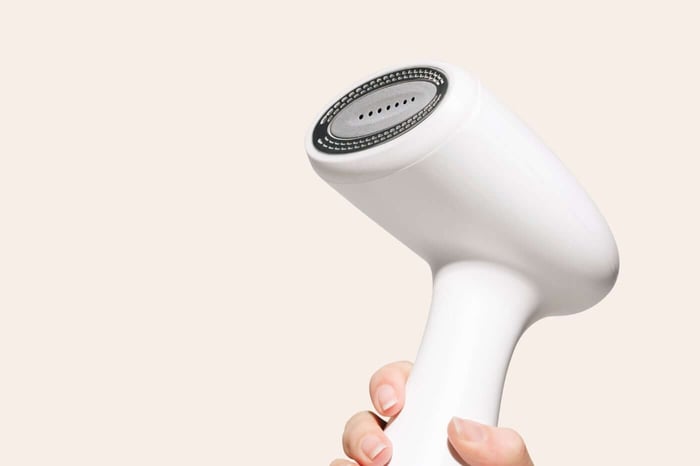
Are you working with delicates, sequins, or hanging garments? → A steamer is the safer, gentler choice. The Nori Cloud is built specifically for this.
Do you want pressing power and steam in one no-board device? → The Nori Press combines both: two heated clamping plates plus a built-in steam function, no board required.
Comparison Table
| Iron | Steam Iron | Garment Steamer |
Contact with fabric | Direct, pressing | Direct, pressing | None, vapor only |
Ironing board required | Yes | Yes | No |
Best for | Sharp creases, heavy fabrics | Sharp creases, faster than a dry iron | Delicates, hanging garments, quick refresh |
Risk to delicate fabrics | Higher | Higher | Lower, no direct contact |
Nori equivalent | Nori Press (works as a dry iron too) | Nori Press (3-in-1 press + steam, no board) | Nori Cloud (steam only) |
Why the Nori Press Doesn’t Fit Neatly Into Any Single Category
The Nori Press blurs the line on purpose. It presses with two heated plates like a steam iron does, which is why it gets a genuinely pressed, dry-clean-style finish that a pure steamer can’t match. But it needs no ironing board, which is normally the steamer’s advantage.
Our full Nori Cloud vs. Nori Press comparison breaks down exactly when each device wins.

The Nori Cloud

$89.99
The next generation of clothing steamers with no leaks, no spits, just better steam.… read more
FAQs
Is a steam iron the same as a steamer?
No. A steam iron still presses fabric with a hot metal plate and needs an ironing board. A steamer never touches the fabric directly and skips the board entirely.
Do I need both an iron and a steamer?
Not necessarily, but plenty of people keep both. An iron or steam iron handles sharp creases and heavy fabrics, while a steamer handles delicates and quick touch-ups a hot plate would risk damaging.
Can a steamer replace an iron completely?
No, not for every task. A steamer can’t lay down a sharp trouser crease or flatten a stiff collar the way direct pressure can. For everyday wrinkle removal on most fabrics, though, a steamer covers the majority of what people actually reach for an iron to do.