Table of Contents
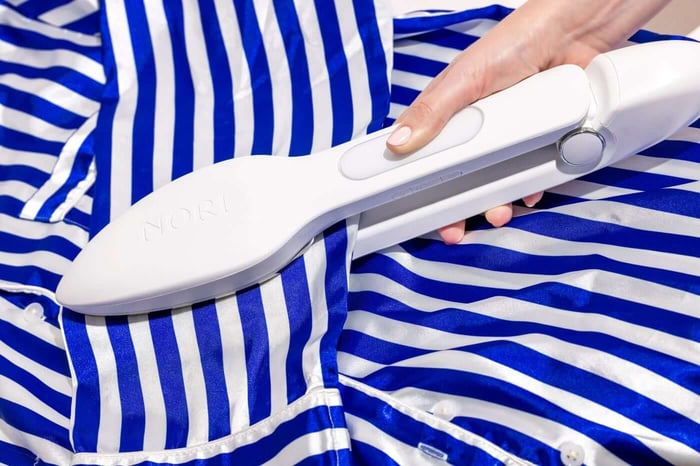
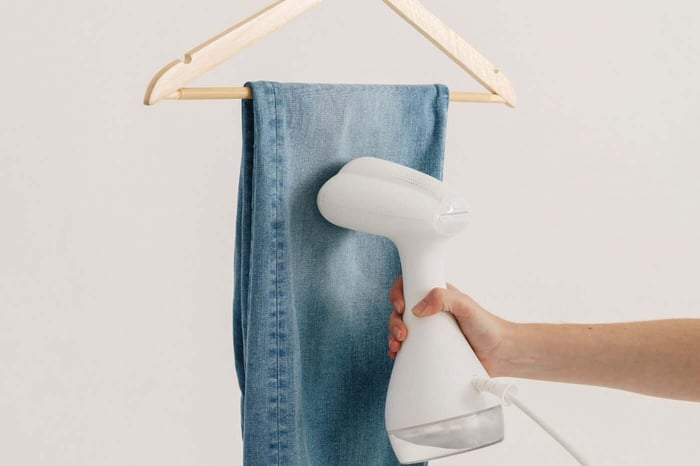
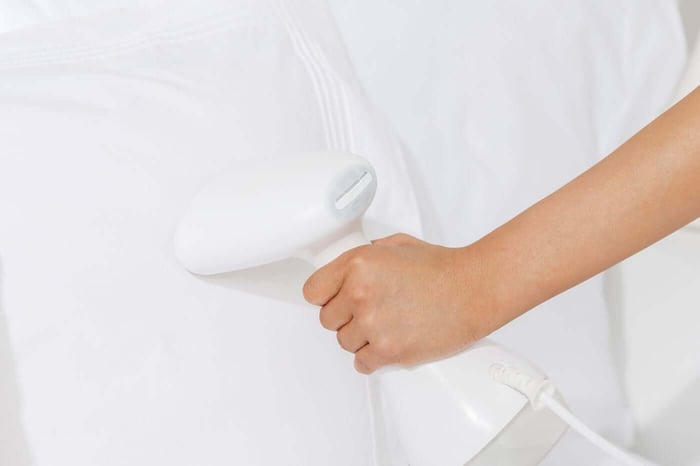 Yes, you can. The Nori Cloud works horizontally as well as vertically, and it’s built to be just as effective on curtains, bedding, upholstery, and other household fabrics as it is on hanging garments. Not every handheld steamer handles horizontal use well, so this comes down to design, not a universal feature of the category.
Vertical vs. Horizontal Steaming: What Actually Changes
Vertical steaming relies on gravity. Water that doesn’t fully vaporize drips back down toward the tank instead of onto the fabric. Horizontal steaming removes that safety net, so a steamer without a horizontal-safe pump design is far more likely to spit or leak water onto whatever’s laid flat beneath it. That’s the exact problem our guide to why steamers spit water breaks down in detail.
The Nori Cloud’s anti-spit design is built to handle both orientations, which is what makes flat-surface use practical instead of risky.
Steaming Bedding
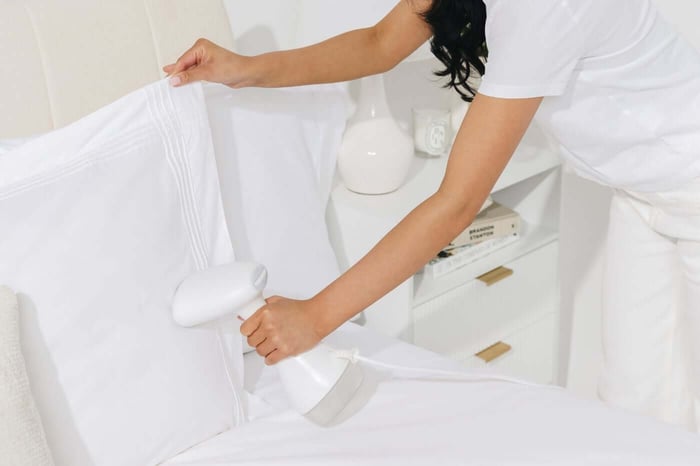
Bedding responds well to a quick horizontal pass, especially sheets and duvet covers pulled straight from the dryer or fresh from storage. Lay the fabric flat, keep the steam head an inch or two above the surface, and work in overlapping passes rather than parking in one spot. Let the fabric air dry for a few minutes before making the bed back up.
Steaming Upholstery
Upholstery is where technique matters more. Check the furniture’s care tag first. A “W” code means water-based cleaning is fine. “S” means solvent-only, so skip steam. “WS” allows either water or solvent cleaners. “X” means vacuum only.
Cotton and polyester upholstery generally tolerate steam well; leather, suede, and some blended fabrics don’t.
A quick wrinkle-relaxing pass with the Nori Cloud uses far less water than a dedicated deep-clean upholstery steamer, so the risk of oversaturating cushions is lower.
But the same rule still applies: avoid down-filled cushions specifically, since deep moisture can cause the feathers to clump and take a long time to dry, which raises the risk of mold or odor. Ventilate the room and let any dampened area air dry fully before sitting on it again.
Surface-by-Surface Quick Reference
Surface | Steam Safe? | Technique |
Cotton or poly bedding | Yes | Lay flat, steam head 1–2 inches above, overlapping passes |
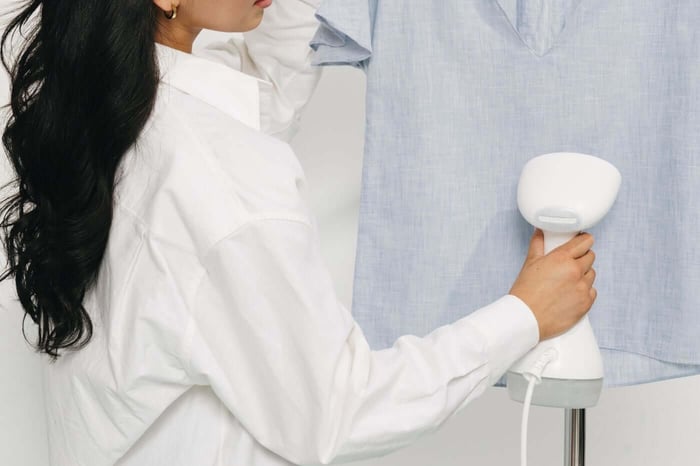
Curtains, left hanging | Yes | Vertical passes, let the fabric’s own weight hold it taut |
Upholstery, W-coded tag | Yes | Light overlapping passes, don’t oversaturate |
Upholstery, S or X-coded tag | No | Steam can stain or damage; vacuum or use the recommended solvent instead |
Down-filled cushions | Avoid | Moisture clumps the fill and dries slowly, raising mold risk |
What This Is (and Isn’t) Good For
A quick horizontal steam pass with the Nori Cloud relaxes wrinkles and freshens fabric on the surface. It’s not a substitute for a dedicated upholstery steam cleaner if your goal is deep stain removal or sanitizing. Think of it as the same quick refresh you’d give a wrinkled shirt, just applied flat instead of on a hanger.
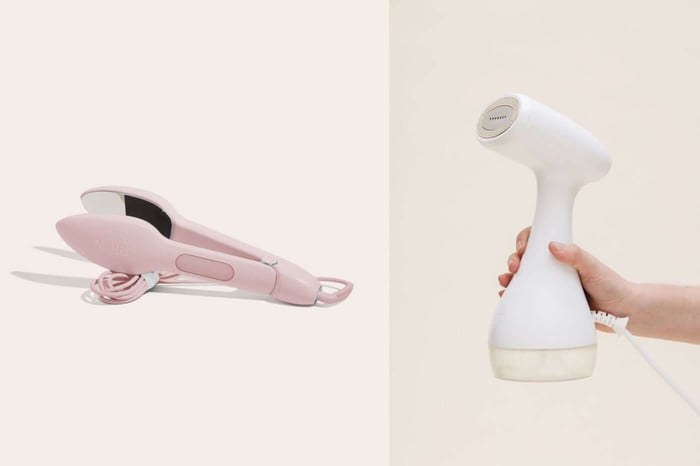
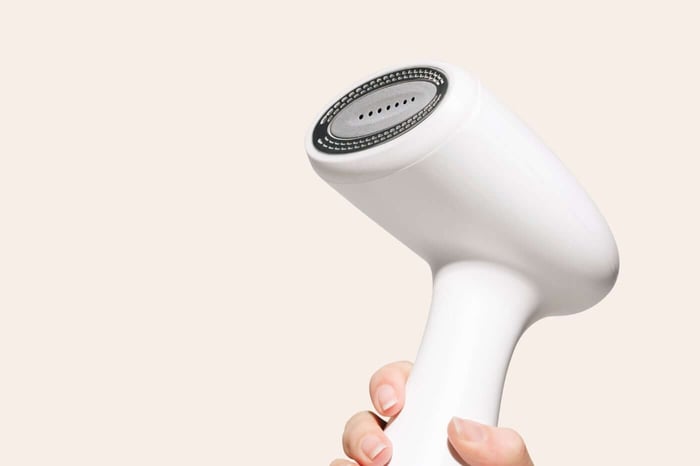
The Nori Cloud

$89.99
The next generation of clothing steamers with no leaks, no spits, just better steam.… read more
FAQs
Can you steam a couch with a handheld garment steamer?
Yes, for light wrinkle and odor refresh, as long as the upholstery’s care tag allows water or steam. It’s not built for deep stain removal the way a dedicated upholstery steam cleaner is.
Is it safe to steam bedding?
Yes. Cotton and polyester sheets and duvet covers handle a quick horizontal steam pass well. Let the fabric air dry for a few minutes before putting the bedding back together.
Can steaming upholstery cause mold?
It can, but only with excess moisture and poor ventilation, mainly on down-filled cushions or in closed rooms. A light wrinkle-relaxing pass uses much less water than a deep-clean steam cycle, and airing out the room afterward largely eliminates the risk.