Table of Contents
 The Nori Press outperforms a traditional iron for travel, quick touch-ups, hanging garments, and delicate fabrics. A traditional iron remains better for heavily starched military collars, military-precision creases, and large-batch sessions of 15+ pieces. For everyday garment care, the Nori Press handles the vast majority of tasks faster, without a board, and with better results on delicates.
Two Different Tools, Two Different Jobs
The comparison between the Nori Press and a traditional iron is a fair one — and it deserves a genuinely honest answer. They are both garment care tools. They work differently. Each has tasks it handles better than the other.
A traditional steam iron is a flat-plate pressing appliance designed for sustained, heavy-duty work on a stationary ironing board. A large water tank, high wattage, and a firm pressing surface make it the right tool for specific high-volume, high-demand tasks.
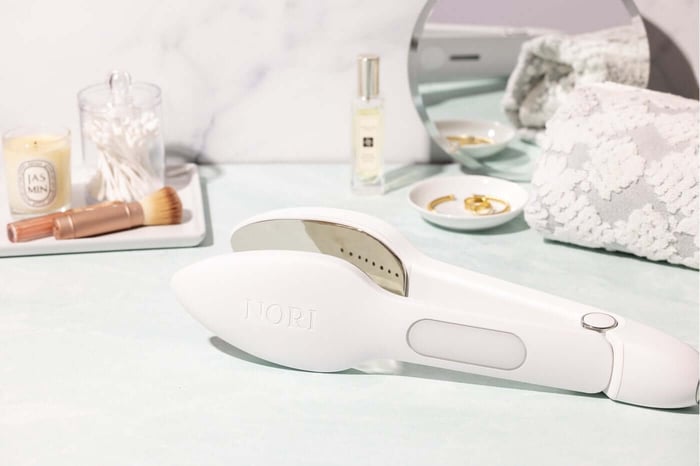
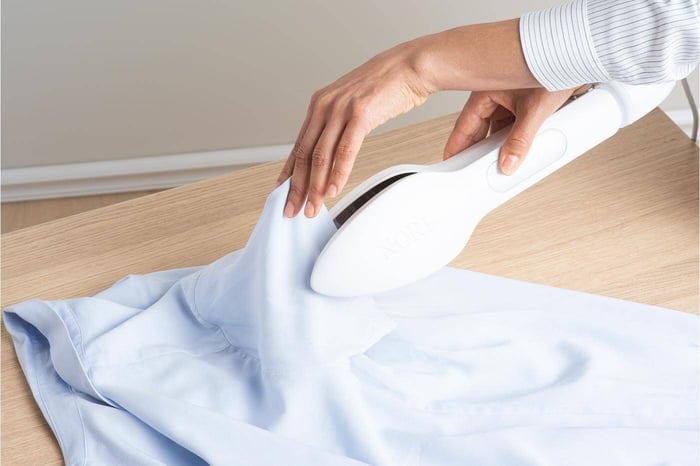
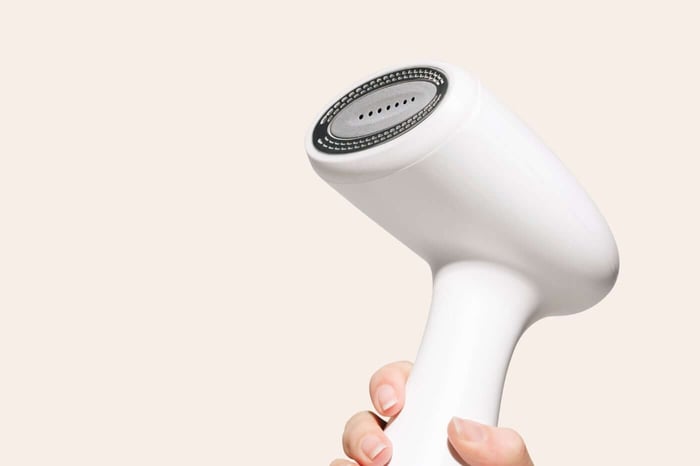
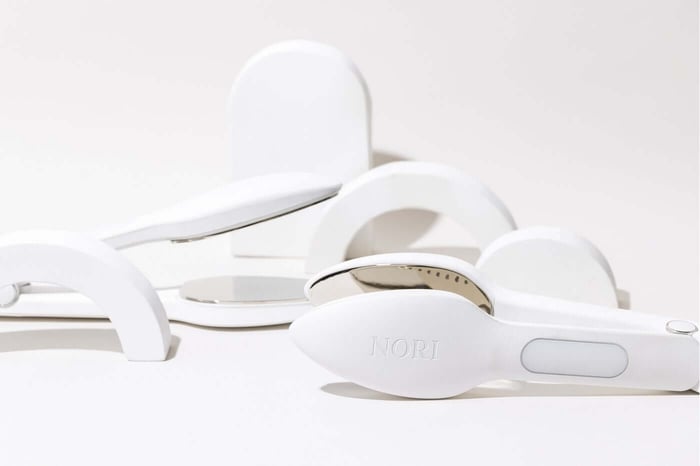
The Nori Press is a dual iron-steamer built around a different philosophy: speed, portability, and professional results without a board. Its Poly-Plate Technology applies heat and pressure from two sides simultaneously, which is genuinely faster and more effective than a single-plate iron on most everyday garments. The right question is not 'which is better' but 'which is right for the task at hand.'
For a broader look at where the Nori Press excels and where it doesn't, the honest performance guide covers it all.
Head-to-Head: 8 Real-Life Scenarios
Scenario | Best Tool | Why |
Quick shirt refresh before a meeting | Nori Press | 3-min heat-up; no board; full outfit done in under 5 minutes |
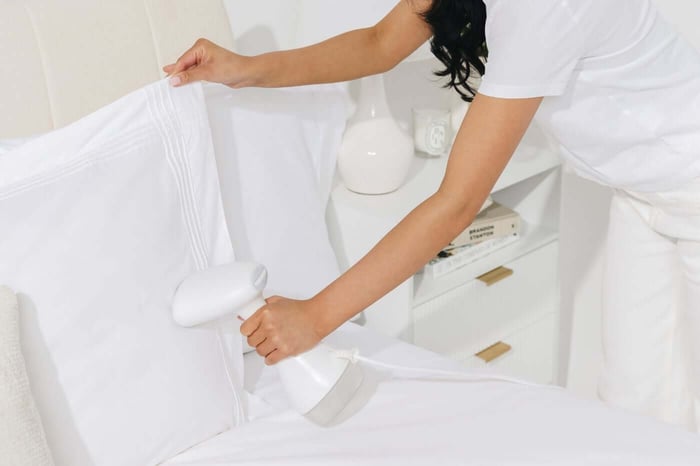
Hotel room ironing | Nori Press | Dual voltage (120/220V); no ironing board; fits in carry-on |
Hanging garments on a rack or hanger | Nori Press | 14-inch arms press vertically — not possible with a traditional iron |
Silk blouse or delicate knit | Nori Press | Steam-only mode; 6 precision heat settings; no hot-plate contact required |
Light-to-medium cotton dress shirt | Nori Press | Poly-Plate Technology presses both sides simultaneously — equal result in roughly half the time |
Heavily starched dress collar (formal uniform) | Traditional iron | Board support + sustained flat-plate pressure creates sharper crease for specialist formal use |
Military-precision crease in formal trousers | Traditional iron | Sustained single-plate pressure with firm board surface for specialist formal requirements |
Large-batch session (15+ items) | Traditional iron | Larger water tank; wider plate covers more fabric area per stroke |
The Nori Press is the right choice for 5 of 8 real scenarios. The traditional iron wins the three tasks requiring sustained heavy-duty pressing, board support, or a large water tank — situations that most households encounter infrequently.
Where the Nori Press Has a Clear Advantage
Speed
The Nori Press heats to pressing temperature in approximately 3 minutes. A traditional iron setup — out of storage, ironing board unfolded, iron heated — averages 12–15 minutes from start to first press. For a morning touch-up of 2–4 garments, the Nori Press finishes before a traditional iron is ready to start.
Delicate Fabrics
On silk, wool, and synthetic blends, the Nori Press's steam-only mode and six precision temperature settings prevent the scorch risk that a traditional iron's single hot plate creates if left stationary for even a moment. Professional stylists on photo sets use the Nori Press specifically because it is faster and safer on delicates than any traditional iron.
Hanging Garments
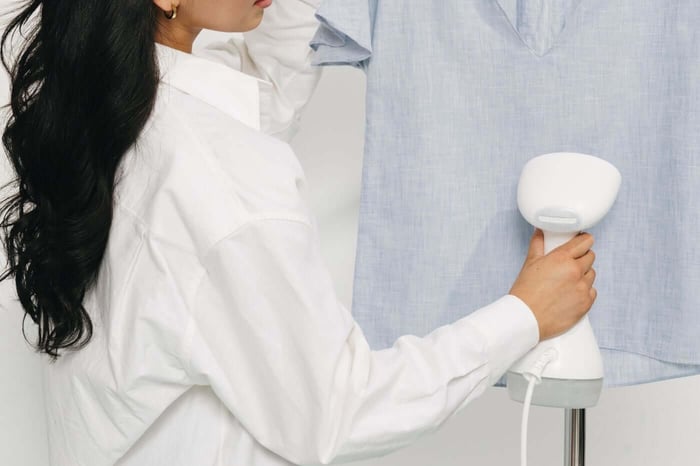
The 14-inch clamping arms of the Nori Press are engineered to reach the middle of a shirt while it hangs on a hanger or clothing rack. No traditional iron can replicate this. For anyone who presses clothes hanging from a wardrobe bar or hotel room door, this is a functional capability that simply does not exist in traditional ironing.
Travel
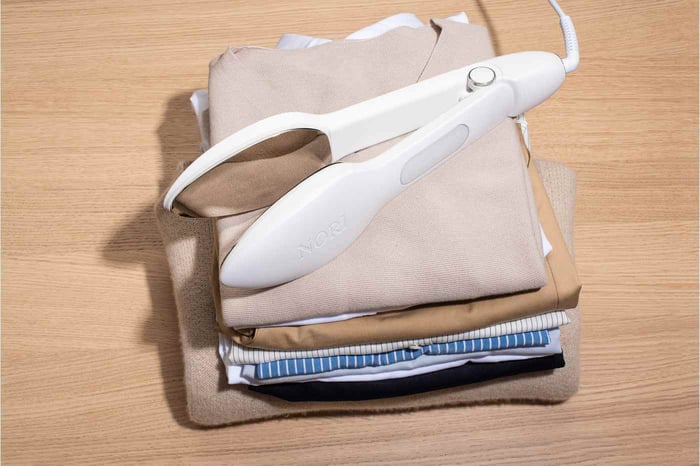
The Nori Press is dual voltage (120/220V, 60Hz), weighs 1.4 lbs, and packs like a hair straightener. It requires no voltage converter abroad and no ironing board anywhere. The average travel iron is single-voltage, typically requires a converter in Europe or Asia, and still needs a pressing surface. This is not a close comparison for frequent travellers.
Where a Traditional Iron Is the Right Specialist Tool
The Nori Press is excellent for the vast majority of everyday garment care. Three situations favour a traditional iron — all of them specialist use cases:
Military-grade formal creases: Trousers requiring a razor-sharp centre crease that holds all day under sustained wear benefit from the sustained downward plate pressure that a firm ironing board provides. The Nori Press delivers excellent results on dress trousers; the sustained-press crease of a weighted iron on a board is the higher standard specifically for formal uniform requirements.
Large-batch laundry sessions: Ironing 15 or more items in a single session favours a traditional iron's larger water tank, wider plate coverage area, and ability to stay on a board between garments.
Heavily starched formal shirts: Starch creates a rigid fabric structure that benefits from sustained plate pressure on a firm surface. The Nori Press handles standard and lightly starched shirts very well; heavily starched formal shirts for specialist military or diplomatic dress occasions are the edge case where a traditional iron has an advantage.
The Case for Having Both
Many Nori Press users find they reach for it for morning touch-ups, travel, hanging garments, delicates, and quick refreshes before events — and keep a traditional iron for specific heavy-duty tasks. Both tools have a place. The Nori Press is the daily driver for modern wardrobes and a travel essential.
Shop the Nori Press — the daily driver for modern wardrobes →

FAQs
Can the Nori Press do everything a regular iron does?
For everyday garment care, yes. It handles light-to-medium fabrics, hanging garments, delicates, and travel pressing equal to or better than a traditional iron. The exceptions are heavily starched specialist formal wear and large-batch laundry sessions where a traditional iron's sustained pressure and larger tank are purpose-built advantages.
Is the Nori Press good for dress shirts?
Very good. On light-to-medium cotton dress shirts, Poly-Plate Technology — pressing both sides of the fabric simultaneously — achieves a professional result in a single pass. On heavier or starched dress shirts, the multi-pass technique delivers excellent results. Collars, plackets, and between-button detail work are particular Nori Press strengths.
Which is faster: the Nori Press or a traditional iron?
The Nori Press is significantly faster for most tasks. For a 2–4 garment touch-up, the Nori Press is finished before a traditional iron reaches pressing temperature.