Table of Contents
- What Is the Nori Press Actually Designed to Do?
- Where the Nori Press Truly Excels
- Fabric-by-Fabric Performance Guide
- The Water Tank: A Portability Trade-off Worth Making
- Thick Fabrics & Deep Creases: What to Expect
- Nori Press vs. Traditional Iron: The Right Tool for the Task
- Troubleshooting: Drips, Spots & Long-Term Care
- FAQs
 The Nori Press delivers crisp, dry-clean-quality results on the vast majority of everyday fabrics in under 3 minutes — no ironing board required. It excels at travel, touch-ups, hanging garments, and delicates. For heavily starched dress collars, military-precision creases, or ironing 15+ pieces in one session, a traditional iron remains the stronger tool. For most households, the Nori Press handles everyday garment care faster and with better results.
What Is the Nori Press Actually Designed to Do?
The Nori Press was built to solve a specific problem: the friction between wanting wrinkle-free clothes and not wanting to drag out an ironing board. It is designed to be the tool you actually reach for every day — and what it is designed to do, it does exceptionally well.
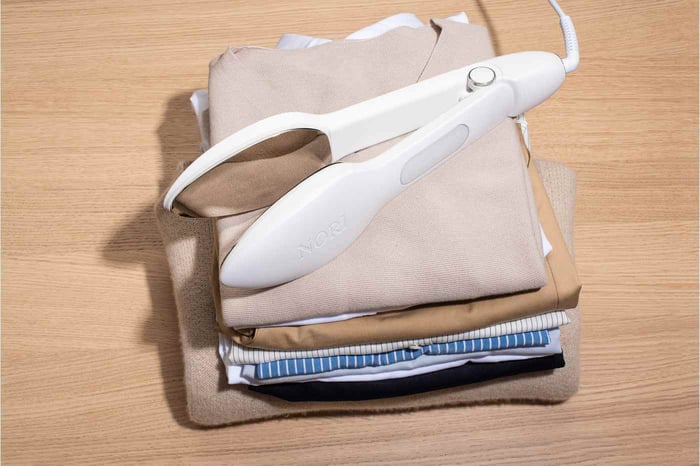
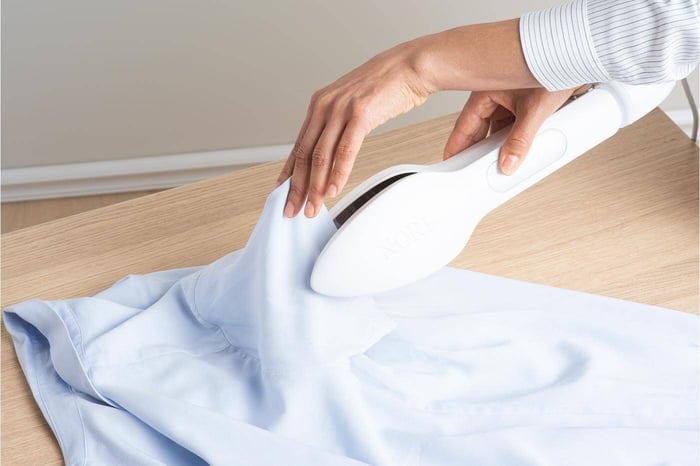
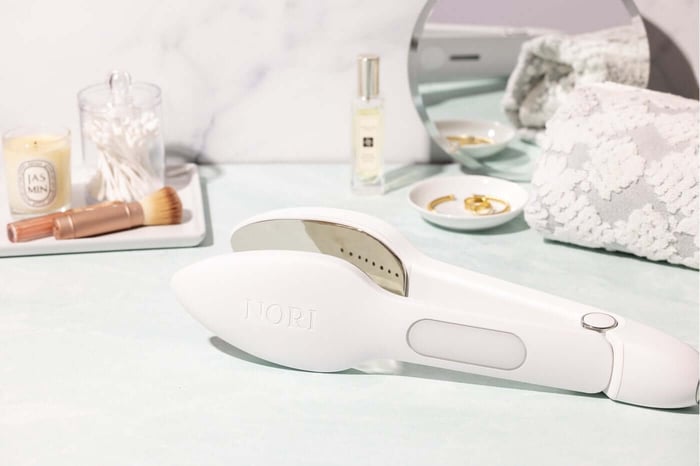
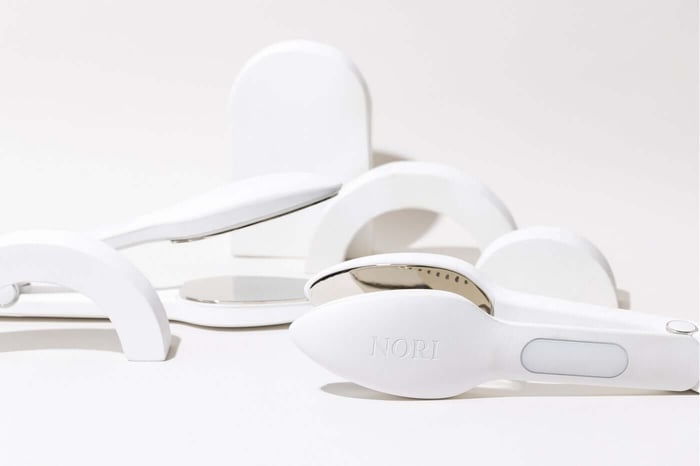
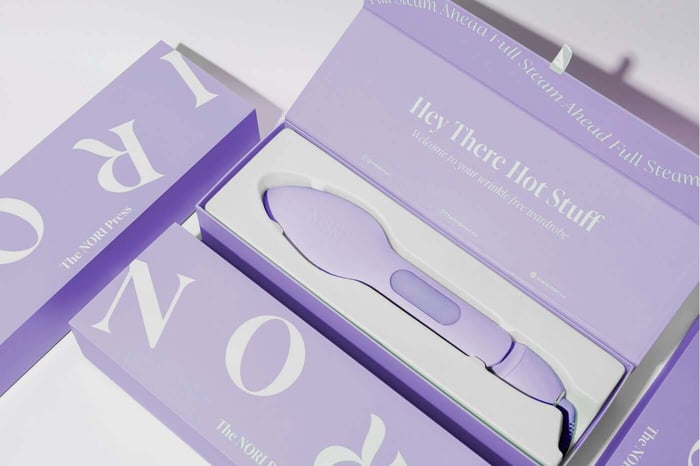
At its core, the Nori Press combines the performance of an iron with the ease of a steamer. Two heated aluminum plates apply direct thermal pressure to both sides of a garment simultaneously, while built-in steam relaxes fibers for a polished finish in less time than a traditional iron.
The design philosophy is simple: remove the friction points of traditional ironing — the clunky ironing board, the setup time, the storage space — without compromising the quality of the result. The Nori Press is a daily tool for modern living — garment care that fits into a hotel room, a small apartment, a carry-on bag.
Explore the full Nori ecosystem at nori.co or shop the Nori Press directly.
Where the Nori Press Truly Excels
The Nori Press performs at its best in situations where a traditional iron is genuinely inconvenient or impractical:
Travel and hotel rooms: The Nori Press is natively dual voltage (120/220V, 60Hz), weighs 1.4 lbs, and fits into carry-on luggage the way a hair straightener does. It requires no ironing board. For anyone who has wrestled a hotel iron onto a wobbly ironing board before a morning meeting, this is a meaningful upgrade.
Touch-ups and quick refreshes: Heat-up takes approximately 3 minutes. A full outfit refresh — collar, cuffs, front placket — takes under 5 minutes. A traditional iron setup typically takes 15–20 minutes for the same result.
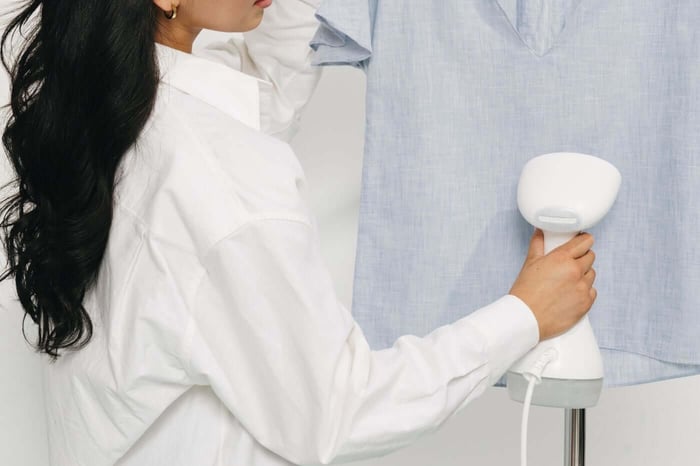
Hanging garments: The 14-inch arms of the Nori Press are designed to reach across a garment while it hangs on a hanger. Shirts, blouses, and trousers can be pressed hanging — a capability traditional irons cannot replicate.
Delicate fabrics: Six fabric-specific heat settings (Poly, Silk, Wool, Cotton, Denim, Linen) give the Nori Press microprocessor-controlled precision. On silk and delicates, it can be used in steam-only mode — hovering near the fabric rather than clamping — a gentler approach than a traditional iron's single hot plate.
Small spaces: At 1.4 lbs and 14 inches long, the Nori Press stores in a drawer, a bag, or a closet corner. The average ironing board occupies 15 square feet of floor space when deployed.
Fabric-by-Fabric Performance Guide
Fabric | Performance | Setting | Key Technique |
Silk | Excellent | Poly / Silk | Steam-only mode or light clamp; keep the device moving |
Linen | Excellent | Linen | High heat + firm clamp; use slow, deliberate passes |
Wool | Excellent | Wool | Medium heat; press cloth recommended for delicate finishes |
Cotton (light to medium) | Excellent | Cotton | Standard clamp-and-glide; single pass usually sufficient |
Cotton (heavy) | Excellent with technique | Cotton / Denim | Multi-pass technique; see Sub-article 2 for full guide |
Polyester blends | Excellent | Poly | Low heat; one pass typically sufficient; keep device moving |
Knits | Good | Wool / Silk | Steam-only or very light clamp; hang to cool before folding |
Denim (light) | Good | Denim | Multi-pass with firm pressure; steam first |
Denim (heavy / structured) | Excellent with technique | Denim | See Sub-article 2: Thick Fabrics Guide for step-by-step |
Tailored jacket | Excellent with technique | Wool | Press cloth; multiple slow passes; avoid seams |
The Water Tank: A Portability Trade-off Worth Making
The Nori Press holds 29ml of water — a deliberate engineering decision, not an oversight. A larger reservoir would increase weight, add bulk, and introduce pressurisation risks in carry-on luggage. The 29ml tank holds enough steam for 5–12 standard garments per fill depending on fabric type and steam setting (up to 12 garments on low steam for delicates; around 5–7 for high-steam sessions on heavy linen or denim).
For longer sessions, refilling takes under 30 seconds.
Thick Fabrics & Deep Creases: What to Expect
The Nori Press handles thick fabrics very well with the right technique. A multi-pass approach — steam first to relax fibres, then two to three slow clamping passes on the Denim or Linen setting — consistently delivers professional results on heavy cotton, structured dress shirts, and denim. The science is straightforward: steam disrupts the hydrogen bonds holding fibres in a wrinkled shape, and the dual-plate pressure re-forms them flat as the fabric cools.
For the very specific use case of heavily starched military dress uniforms requiring a razor-sharp crease that holds under sustained formal wear, a traditional iron with board support provides additional sustained plate pressure. This is a specialist scenario that most households encounter infrequently or not at all.
Nori Press vs. Traditional Iron: The Right Tool for the Task
Scenario | Best Tool | Why |
Quick shirt refresh before a meeting | Nori Press | 3-min heat-up; no board; done in 5 minutes total |
Hotel room ironing | Nori Press | Dual voltage; no board needed; fits in carry-on |
Hanging garments on a rack | Nori Press | 14-inch arms press vertically |
Silk blouse or delicate knit | Nori Press | Steam-only mode; 6 precision heat settings |
Light-to-medium cotton dress shirt | Nori Press | Poly-Plate Technology presses both sides simultaneously |
Heavily starched formal uniform | Traditional iron | Board support + sustained flat-plate pressure |
Military-crease formal trousers | Traditional iron | Sustained pressure with board support |
Large batch (15+ items) in one session | Traditional iron | Larger tank; faster coverage area per stroke |
The Nori Press is the right choice for the everyday garment care tasks most households perform. The traditional iron retains an advantage in the three specialist tasks that require sustained heavy-duty pressing or board support — situations most households encounter infrequently.
Troubleshooting: Drips, Spots & Long-Term Care
The most common Nori Press issues — dripping, water spots, and gradual steam decline — share a single root cause: mineral-laden tap water. The fix is equally simple: use the Nori Fabric Facial or distilled water in the reservoir. Dripping during use is almost always caused by one of three things: tap water mineral content, engaging the steam function before the device reaches full temperature, or tilting the nose downward while steaming. All three are technique issues with immediate, permanent fixes.
Monthly descaling (empty tank, fill with diluted white vinegar, steam over sink, flush with distilled water) maintains steam vent performance long-term. Nori's customer support team is available at hello@nori.co and happy to answer any questions.
Shop the Nori Press — professional results, designed for real life →

FAQs
Is the Nori Press water tank too small?
No. The 29ml tank holds enough for 5–12 garments per fill depending on steam setting and fabric type, and refilling takes under 30 seconds. The capacity is an intentional engineering decision: a larger tank would add weight and bulk that directly compromise the portability the Nori Press is designed for.
Can the Nori Press replace a traditional iron completely?
For the vast majority of everyday garment care, yes — it handles light-to-heavy fabrics, hanging garments, delicates, and travel pressing faster and without an ironing board. The exception is the specialist use case of heavy sustained pressing: large-batch laundry sessions and heavily starched military dress uniforms where board support provides additional pressure.
Why does my Nori Press drip water?
Almost always one of three causes: tap water minerals (switch to Fabric Facial or distilled water), engaging steam before the device is fully heated (wait for the ready indicator), or tilting the nose down during steaming (keep it level or slightly elevated). All three have immediate fixes.
Is pressing comfortable for my hands and wrists?
Yes. The Nori Press weighs 1.4 lbs — lighter than most traditional irons. A relaxed three-finger grip at elbow height with a neutral wrist delivers a comfortable session for any length.
Does the Nori Press work on thick jeans or dress shirts?
Yes, with the multi-pass technique: use the Denim or Cotton setting, steam first to relax fibres, then apply two to three slow, firm passes. Two slow passes consistently delivers professional results.