Table of Contents
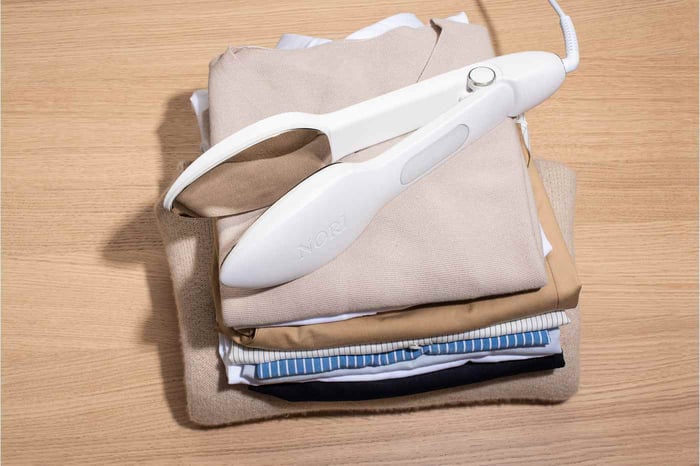 The Nori Press works beautifully on thick fabrics — including heavy cotton, denim, and structured dress fabrics — with the multi-pass technique. Steam first to relax fibres. Then apply two to three slow, firm clamping passes on the Denim or Linen setting. One fast pass on thick fabric will underperform. Two slow passes consistently delivers professional results.
How the Nori Press Removes Wrinkles: The Science That Matters
Thick fabrics hold wrinkles more stubbornly. That's just the nature of heavier weaves like denim, linen, and thick cotton. Heat and moisture loosen the fibres, pressure flattens them, and as the fabric cools, it locks into that smooth shape. One pass doesn't always give the heat and pressure enough time to work through the full thickness. Multiple passes do. Same principle, just repeated until the fabric cooperates.
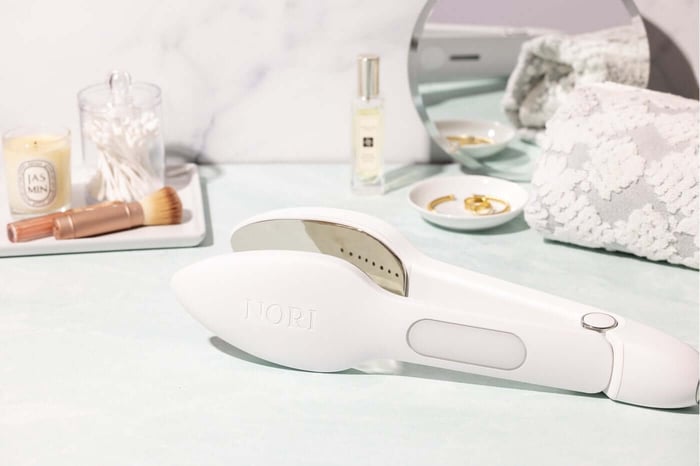
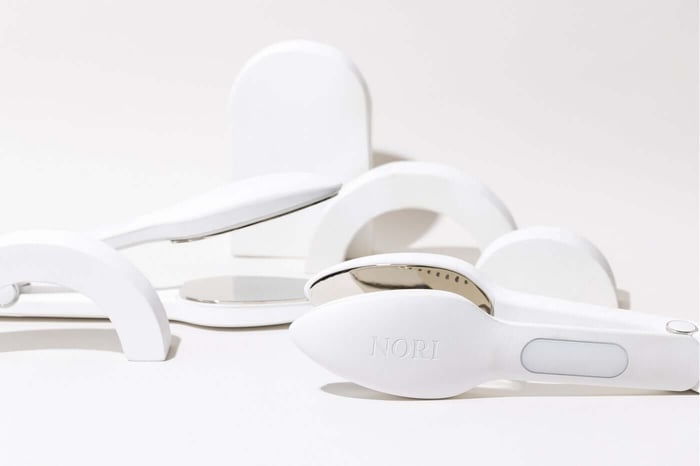
A traditional iron applies heat and pressure from a single plate, relying on the ironing board as a firm counter-surface. The Nori Press uses Poly-Plate Technology to apply heat and pressure from two plates simultaneously — doubling the thermal contact and, on most everyday fabrics, significantly reducing the time needed to achieve a professional result.
On thick fabrics, the higher fibre density means more bonds to disrupt. The solution is not more heat — it is more time in contact with the fabric. That is the core principle of the multi-pass technique.
Fabric Performance Guide
Fabric | Performance | Setting | Notes |
Light cotton shirt | Excellent | Cotton | Single pass; standard speed; no special technique needed |
Linen trousers | Excellent | Linen | Firm clamp; medium-slow speed; excellent finish |
Wool blazer | Excellent | Wool | Use a pressing cloth for delicate finishes |
Silk blouse | Excellent | Silk | Steam-only mode; no clamping required |
Heavy cotton (structured) | Excellent with technique | Cotton / Denim | Multi-pass technique; 2 slow passes |
Denim jeans | Good | Denim | Multi-pass; 2–3 slow passes; hang to cool |
Structured dress shirt | Excellent with technique | Cotton | Multi-pass on collar and placket; single pass on body |
Heavy canvas / thick twill | Good with technique | Denim | 3–4 passes; use steam-first method |
Heavily starched military formal | Traditional iron preferred | — | Board support provides sustained plate pressure for specialist crease requirements |
The Multi-Pass Technique: Step-by-Step
This five-step method works on any thick fabric and consistently delivers professional results:
Step 1: Set the temperature. Select the Denim or Linen setting for thick fabrics. Allow the device to reach full heat — wait for the green ready indicator before proceeding. Pressing before full heat produces weak results on thick fabric.
Step 2: Steam first. Before clamping, hold the Nori Press close to the fabric (without contact) and engage steam for 2–3 seconds. This relaxes the hydrogen bonds before pressure is applied — a critical step that makes the biggest difference on heavy fabrics. Steam-then-press outperforms press-only on every thick fabric.
Step 3: Clamp firmly and move slowly. Apply firm, deliberate clamping pressure and move the device at half the speed you would use on a light fabric. Let the heat transfer fully. Slow passes are the single biggest predictor of result quality on thick fabrics.
Step 4: Repeat with a second pass. Reposition slightly (overlap the previous pass by one third) and repeat the slow, firm stroke. For most heavy cotton and denim, two passes achieves a result equivalent to a traditional iron on the same fabric.
Step 5: Allow to cool flat or hanging. Heavy fabrics benefit from 30–60 seconds of cooling in a flat or hanging position before wearing or folding. The fibres are re-setting into their new flat configuration — moving a thick garment while still warm can re-introduce light surface creases.
Getting the Details Right: Collars, Plackets, and Cuffs
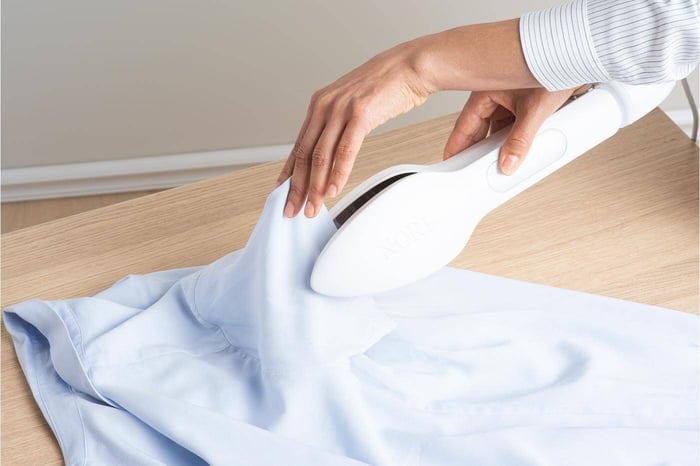
The detail work that makes a shirt look truly pressed — sharp collar points, flat button placket, clean cuffs — is where the Nori Press has a specific advantage over handheld steamers. The pointed tip of the Nori Press is engineered to press between buttons and into collar corners, a precision move impossible with a steamer's broad, rounded head.
Collar technique: Press the collar flat first with medium-slow passes. Then fold the collar and run the narrow tip along the crease line with firm pressure. A second steam-then-press pass on the Cotton or Denim setting delivers a collar finish that matches a professional dry-cleaner's press.
When a Traditional Iron Is the Right Tool
The Nori Press is the right tool for the vast majority of garment care tasks. For two specific specialist situations, a traditional iron with board support has an advantage:
Military formal wear: Heavily starched formal trousers requiring a razor-sharp military crease that holds all day under sustained wear. The sustained downward pressure of a weighted iron on a firm board surface creates a crease depth suited to that specific use case.
Large-batch sessions: Large-batch ironing sessions of 15 or more pieces where the traditional iron's larger water tank, wider plate coverage area, and stationary board support provide efficiency advantages for that volume.
These are specialist use cases. If your typical garment care involves everyday shirts, trousers, blouses, and travel clothes, the Nori Press handles them with excellent results and considerably less setup time.
For a full breakdown of how the Nori Press performs across every fabric type, see the complete performance guide.
Shop the Nori Press — master every fabric →

FAQs
Can the Nori Press handle denim jeans?
Yes. Use the Denim setting, steam the fabric first, then apply two to three slow, firm passes. Hang or lay flat to cool for 30–60 seconds. The result is comparable to a traditional iron. Heavy seams and waistbands benefit most from the steam-first step.
Why are my wrinkles coming back after pressing?
This is almost always a cooling issue, not a pressing failure. Heavy fabrics need 30–60 seconds to cool in a flat or hanging position before being moved, worn, or folded. If you handle a thick garment immediately after pressing while it is still warm, the fibres have not fully set and surface creases can return.
What temperature setting should I use for thick cotton?
Use the Cotton or Denim setting depending on fabric weight. The Denim setting applies higher heat, which is better for heavier cotton weaves. Start with Cotton for standard dress shirts and move to Denim for anything heavier — thick jeans, canvas, structured trousers.