Table of Contents
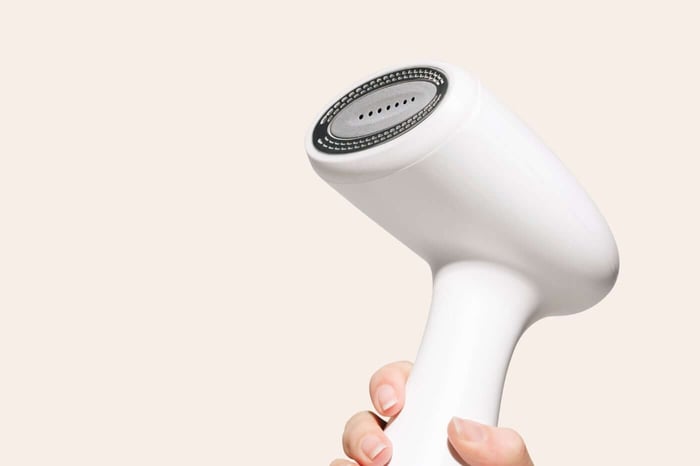
 Nori Press dripping is almost always caused by one of three things: tap water mineral content, engaging steam before the device reaches full temperature, or tilting the nose downward while steaming. None of these indicate a faulty device. All three have immediate fixes that permanently resolve the problem.
Why Steam Irons Drip: The Three Root Causes
Steam irons drip when water reaches the steam vents before it has fully converted to vapour. Understanding the three causes makes the fixes intuitive:
Cause 1 — Mineral-Laden Water (the most common and most progressive)
Tap water contains dissolved calcium and magnesium. These minerals accumulate in the steam vents and heating element over time, partially blocking the vents and causing uneven steam output. As the blockage grows, loosened mineral particles escape with the steam and deposit as white spots on fabric. This is a progressive problem — it worsens with every session of tap water use. Using distilled water or Nori Fabric Facial eliminates this cause entirely.
Cause 2 — Premature Steam Engagement (the most common in new users)
The steam function requires the plates to be at full temperature before water converts cleanly to vapour. Engaging steam during heat-up — before the green ready indicator — produces partially condensed water vapour that escapes as visible drips. New users often try to speed up their session by steaming early. Waiting for the ready indicator permanently resolves this.
Cause 3 — Nose-Down Orientation
During steaming, keeping the nose of the Nori Press angled downward allows water to flow toward the steam vent by gravity before it vaporises. This is especially common when pressing in a horizontal position without monitoring device angle. Keeping the nose level or slightly elevated during steaming completely prevents this.
If you're still getting a feel for the device overall, the honest performance guide is the best place to start.
The Anti-Drip Technique: Step-by-Step
Step 1: Fill with Nori Fabric Facial or distilled water. This single change eliminates Cause 1 entirely and permanently. The Fabric Facial's deionised formula contains no minerals that can accumulate in steam vents. Its essential oil blend also lightly refreshes fabrics as you press — an added benefit that tap water cannot provide.
Step 2: Wait for full heat before engaging steam. After powering on, allow the Nori Press to reach its target temperature — the green ready indicator confirms this, typically at the 3-minute mark. Only then engage the steam function.
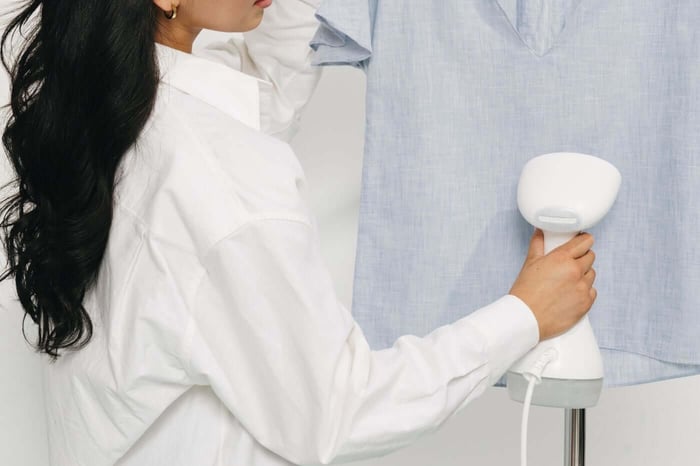
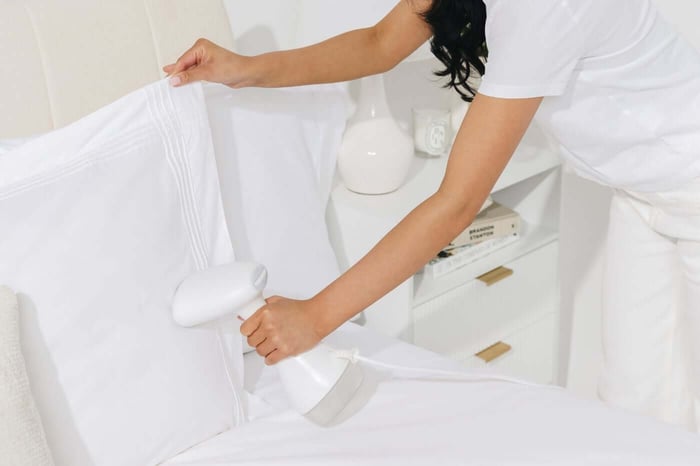
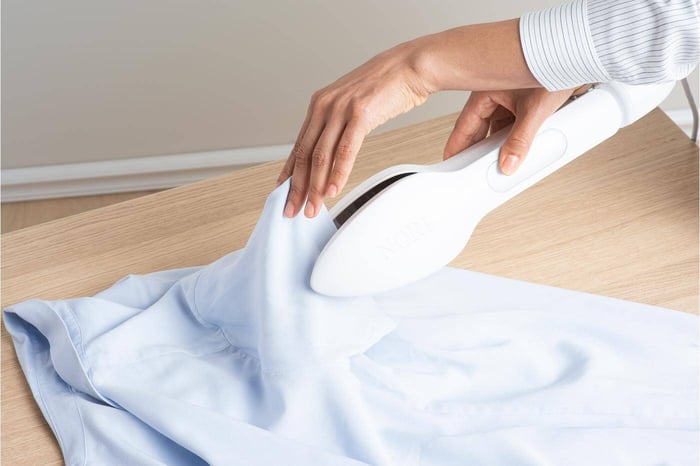
Step 3: Keep the nose level or slightly elevated. While steaming, maintain the nose of the device at a level or slightly upward angle. This applies equally during vertical (hanging) and horizontal (flat surface) pressing.
Step 4: Use steam in 2-second bursts. A 2-second steam burst, a brief pause, then another burst — this rhythm maximises vapour production and minimises liquid escape from the vents.
Step 5: Drain the reservoir after each session. Leaving water sitting in the tank accelerates mineral accumulation even with distilled water. After each session, drain any remaining water and leave the reservoir open to air-dry.
Water Spots on Dark Fabric: Prevention and Removal
White or pale spots on dark fabric are the most alarming consequence of dripping — and almost never permanent.
What causes them: Steam escaping the vents carries mineral deposits from inside the tank or vents and deposits them on the fabric surface. With tap water, this is an inevitable and progressive issue. With Fabric Facial or distilled water, it essentially does not occur.
Removing Existing Water Spots
On most fabrics: press the same area again with a clean, lightly damp pressing cloth between the fabric and the Nori Press. The moisture re-dissolves the mineral deposit; the heat evaporates it. Effective on cotton, linen, and polyester.
On delicates where re-pressing is not ideal: a soft, damp cloth with gentle circular rubbing typically removes the mineral deposit without pressing. Work from the outside of the spot inward.
White staining on dark silk: use a cotton pad lightly dampened with distilled water and dab gently. Do not rub. Allow to air dry.
Preventing Water Spots Permanently
Two steps eliminate water spots in nearly all cases: switch to Nori Fabric Facial or distilled water, and keep the nose level during steaming. Users who make both changes report no recurrence.
Long-Term Care: The Monthly Descaling Routine
Even with Fabric Facial or distilled water, trace accumulation can occur over months of regular use. A monthly descaling routine takes 10 minutes and keeps the Nori Press performing at full steam output indefinitely:
Step 1: Empty the tank completely.
Step 2: Fill halfway with a 50/50 mix of distilled white vinegar and distilled water.
Step 3: Heat to the Linen setting (the highest temperature setting).
Step 4: Hold over a sink and press the steam button repeatedly until the tank is empty. The acetic acid in the vinegar dissolves mineral deposits inside the vents and heating element.
Step 5: Refill with plain distilled water and steam the full tank over the sink to flush any remaining vinegar residue from the vents.
Step 6: Wipe the plates with a clean, cool, damp cloth. Never use abrasive cleaners or scourers on the aluminium plates.
After descaling, the Nori Press will produce noticeably more consistent steam output. Monthly descaling prevents the gradual performance decline that many users attribute to device age — it is almost always accumulated scale, not wear.
If Dripping Persists After Following These Steps
In the rare case that dripping persists after correcting water type, technique, and orientation, Nori's customer support team is available at hello@nori.co — most issues resolve in one session. For devices purchased through Target or Amazon, Allstate protection plans cover steam mechanism defects.
Protect your device long-term — Shop Nori Fabric Facial →
Fabric Facial

$15.00
Odor-eliminating ironing water and wrinkle-release spray designed to improve your ironing experience. … read more
FAQs
Why does my Nori Press drip water when I steam?
Almost always one of three causes: tap water mineral content (switch to Fabric Facial or distilled water), engaging steam before the device is fully heated (wait for the green ready light), or tilting the nose downward during steaming (keep it level or slightly elevated). All three have immediate, permanent fixes.
How do I clean the Nori Press steam vents?
Monthly descaling: fill the reservoir halfway with a 50/50 mix of distilled white vinegar and water, heat to the Linen setting, and steam the entire contents over a sink. Then flush with plain distilled water. Wipe the plates with a cool, damp cloth. Never use abrasive cleaners on the plates.
Can I use tap water in the Nori Press?
You can, but it is not recommended. Tap water minerals progressively accumulate in the steam vents, reducing output and eventually causing white spots on fabric. Nori Fabric Facial or distilled water eliminates this issue entirely. The Fabric Facial also lightly scents and refreshes fabrics as you press.