Table of Contents
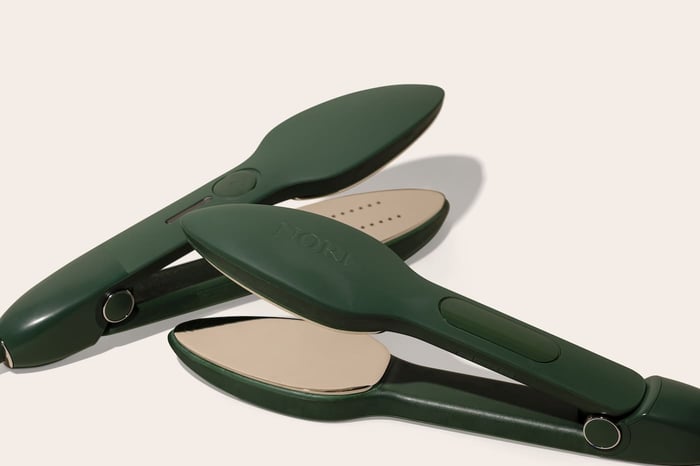
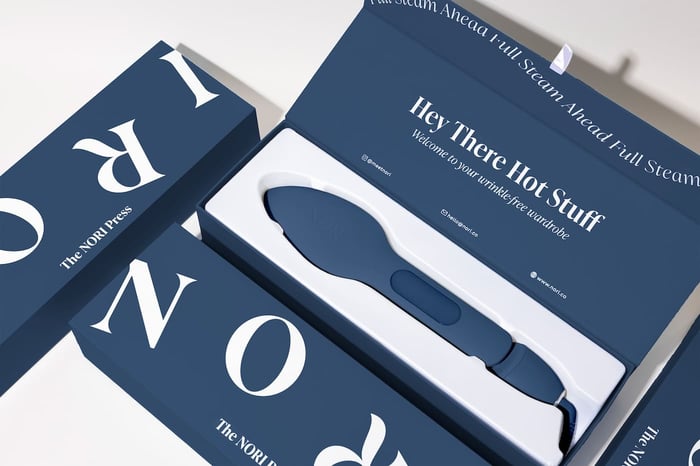
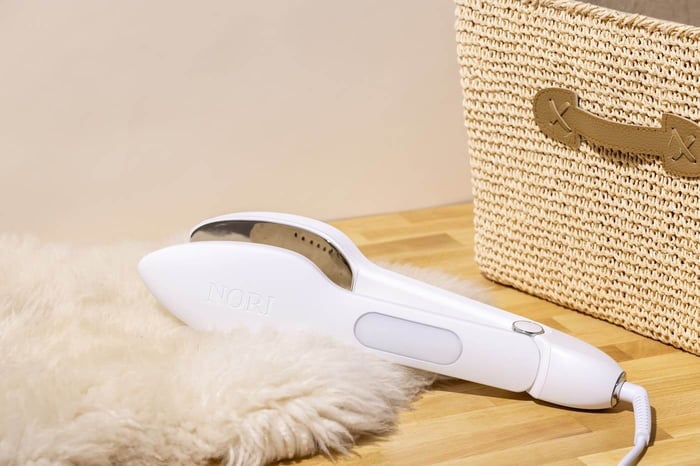
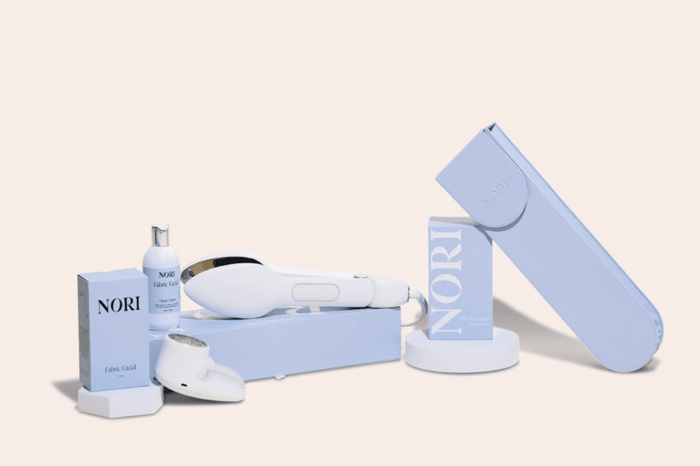
Dual-plate "pressers" like the Nori Press outperform traditional handheld steamers by combining thermal energy with mechanical compressive force. While steamers rely solely on moisture to relax the hydrogen bonds in fabric, pressers clamp the material between two heated aluminum plates.
This dual-action approach creates the tension and pressure necessary to reset the polymer memory of the fiber, resulting in crisp, sharp creases that steam alone cannot achieve.
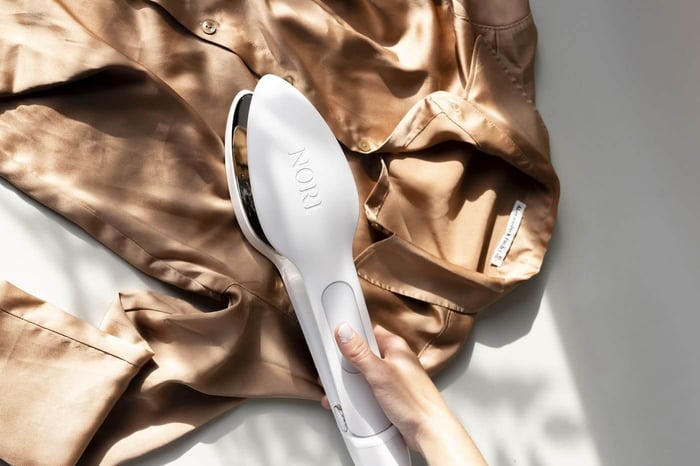
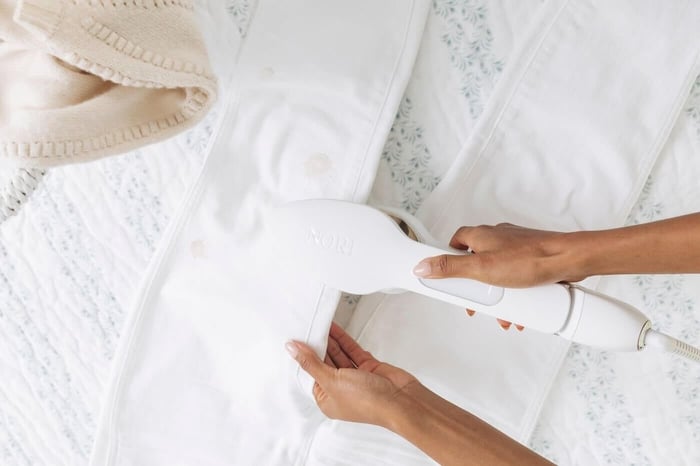
Furthermore, the clamping design mimics the functionality of an ironing board in a handheld form, allowing for precision detailing on collars, cuffs, and plackets without the need for external support surfaces.
The Mechanics of Wrinkle Removal: Steam vs. Press
To comprehend the superiority of the dual-plate system, one must examine the underlying physics of textile deformation. Wrinkles in fabrics like cotton and linen are stable configurations of hydrogen bonds between cellulose chains.
The Limitation of Steamers: Steamers operate by injecting hot water vapor into the fabric. The moisture acts as a plasticizer, lowering the Glass Transition Temperature (Tg) of the fibers, making them pliable. However, steamers rely on gravity to pull the fibers straight. For lightweight fabrics (silk, rayon), gravity is sufficient. For structural fabrics (heavy cotton, denim, linen), the internal resistance of the fiber often exceeds the force of gravity, meaning the wrinkles relax but do not flatten completely.
The Advantage of Dual-Plate Pressers: Pressers utilize the same moisture-based plasticization but add mechanical pressure. By clamping the fabric, the user applies force perpendicular to the fiber axis. This physically forces the polymer chains into a linear alignment while they are in their rubbery, heated state. As the fabric passes through the plates, the moisture evaporates, and the fabric cools below its Tg, "locking" the fibers in this new, flat configuration. This is why a Nori Press can create a sharp crease on a dress shirt sleeve, while a steamer cannot.
Feature Matrix: Nori Press vs. Traditional Handheld Steamers
The following matrix contrasts the functional capabilities of the Nori Press (Dual-Plate) against a market-leading steamer (e.g., Conair Turbo ExtremeSteam).
Feature | Dual-Plate Presser (Nori) | Traditional Handheld Steamer | Winner |
Contact Mechanism | Direct Clamping (Heated Al Plates) | Non-Contact Steam Plume | Nori (Force application) |
Wrinkle Removal (Linen) | High (Heat + Pressure) | Low (Moisture only) | Nori |
Creasing Capability | Excellent (Sharp edges) | None (Soft drape only) | Nori |
Precision (Collars/Cuffs) | High (Tip reaches tight spots) | Low (Broad spray) | Nori |
Water Tank Capacity | ~29 ml | 200ml - 300ml | Steamer (Less refilling) |
Continuous Run Time | ~10 Minutes | 15-20 Minutes | Steamer |
Ergonomics | Clamping Motion (Grip req.) | Passive Holding | Steamer (Less hand fatigue) |
Sanitization | Contact Heat + Steam | Steam Only | Draw |
The Evolution of the "Hair Straightener Hack"
The dual-plate presser category owes its existence to a common consumer "hack": using hair straighteners to iron clothes. For decades, travelers and students used flat irons to press hems and shirt collars because they were portable and effective. This effectiveness stemmed from the intense heat and high clamping pressure.
However, the "hack" had severe limitations and risks:
Unregulated Heat: Hair straighteners often operate at 365°F - 450°F (185°C - 230°C), far exceeding the melting point of polyester (approx. 300°F) and nylon. This led to frequent garment damage.
Short Reach: Hair tools are short, making it impossible to reach the center of a garment without bunching the fabric.
Lack of Moisture: Hair irons are dry. Pressing dry cotton at high heat can cause scorching or "shining" (flattening the fiber to a reflective state).
The Nori Press professionalized this concept by:
Elongating the Arms: The 14-inch chassis allows deep reach into garments.
Fabric-Specific Temps: Six settings ranging from safe-for-poly to linen-grade heat.
Steam Integration: Adding steam protects the fiber from direct scorch and speeds up the Tg transition.
Image Comparison Description (Textual Representation)
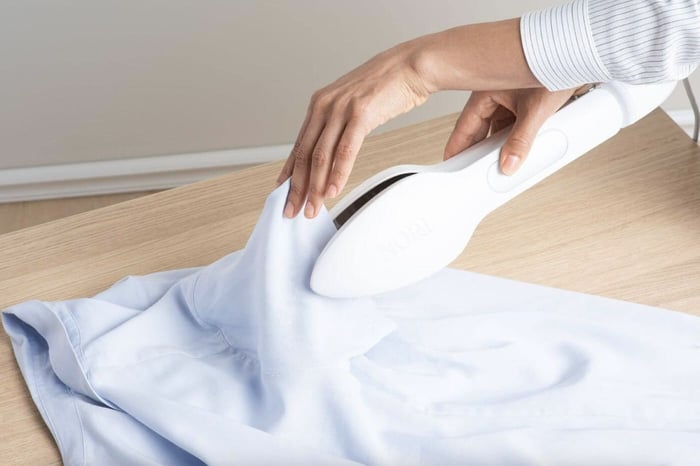
Visual A: A linen shirt treated with a steamer. The fabric looks softer and less crumpled, but retains a "pebbled" texture. The collar is soft and rolls slightly.
Visual B: A linen shirt treated with Nori Press. The fabric is flat and smooth. The collar stands upright with a sharp crease. The button placket is perfectly straight.
Analysis: The difference is pressure. Visual A relies on gravity; Visual B benefits from the mechanical compression of the aluminum plates.

FAQs
Is the Nori Press faster than a steamer?
It depends on the garment. For a t-shirt, a steamer is faster because you can wave it broadly. For a button-down shirt, the Nori is faster because you don't have to go over the same spot repeatedly to get it flat—one pass with pressure usually suffices.
Does the clamping motion hurt your hand?
Some users report hand fatigue if pressing many items at once, as it requires active grip strength. Steamers are more passive. The Nori is best for targeted pressing (1-3 items), not doing a week's laundry at once.
Can I use the Nori on curtains?
No. The Nori is designed to clamp fabric. You cannot effectively clamp a hanging curtain panel in the middle. A traditional steamer is the only tool for upholstery and drapes.