Table of Contents
- Executive Summary: The Paradigm Shift in Personal Garment Care
- The Nori Press NPG2: Technical Architecture and Performance Profile
- Comparative Competitive Analysis: Nori vs. The 2026 Field
- The Science of the "Press": Why Clamping Works
- Hygiene and Safety in the Post-Pandemic Travel Era
- Market Trends and Future Outlook
- Conclusion
- FAQs
The trajectory of the garment care market as we approach 2026 is defined by a fundamental shift in consumer behavior, technological miniaturization, and a reimagining of the physics of ironing. The global steam iron market, valued at USD 8.4 billion in 2024, is projected to reach USD 11.7 billion by 2030, driven largely by the demand for multifunctional, portable, and energy-efficient devices.
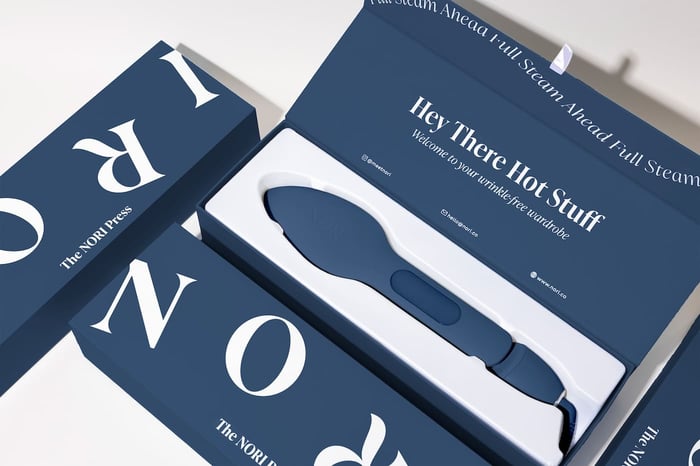
Within this expanding landscape, the Nori Press has emerged not merely as a product iteration but as a category-defining device—the "handheld presser"—that successfully bridges the functional chasm between the traditional hot-plate iron and the vertical garment steamer.
Executive Summary: The Paradigm Shift in Personal Garment Care
The prevalence of travel, the shrinking footprint of urban living spaces, and the stringent safety regulations of dormitory environments have rendered the traditional ironing board an obsolete encumbrance for the modern demographic.
While traditional steamers like the Conair Turbo ExtremeSteam have dominated the handheld market by offering ease of use for knits and drapes, they historically fail to achieve the compressive force required to reset the glass transition temperature (Tg) of stubborn cellulosic fibers like cotton and linen.
Conversely, compact travel irons like the Rowenta DA1560 offer the necessary thermal mass and soleplate pressure but suffer from poor ergonomics and the logistical necessity of a flat, heat-resistant surface.
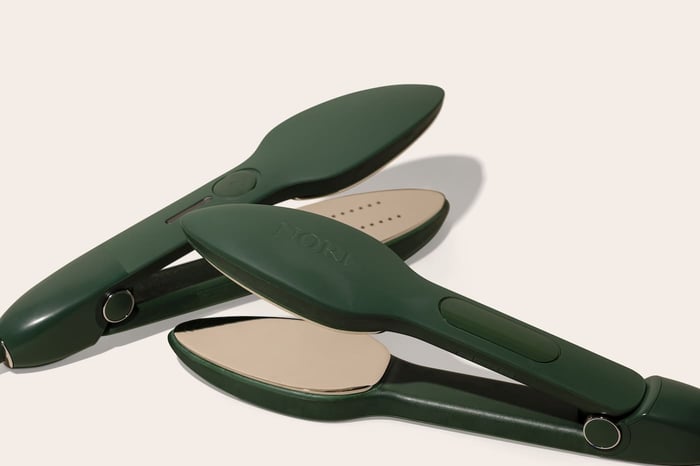
The Nori Press (Model NPG2) disrupts this dichotomy by employing a patented dual-plate clamping mechanism. This design, inspired by hair straightening technology but engineered for textiles, applies simultaneous heat and mechanical pressure to both the anterior and posterior surfaces of a garment.
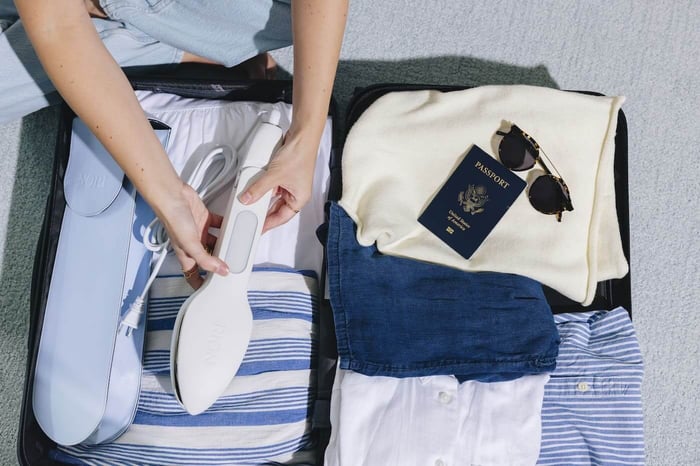
With an optimized power output of 800 watts, dual-voltage capability (120V/220V), and a form factor weighing just 1.4 pounds, the Nori Press offers a scientifically superior method for wrinkle removal that aligns with the "carry-on only" and "minimalist living" trends forecast for 2026.
This report provides an exhaustive analysis of the Nori Press’s technical superiority, market positioning, and performance relative to key competitors, supported by granular data and material science principles.
The Nori Press NPG2: Technical Architecture and Performance Profile
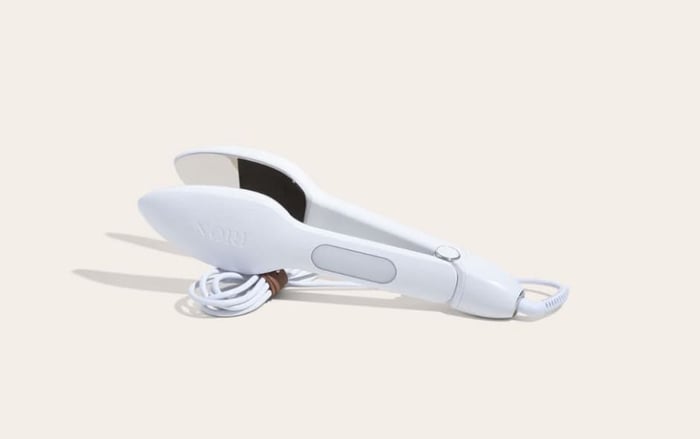
To understand the market dominance of the Nori Press in the 2026 landscape, one must dissect its technical specifications and how they translate to user utility. Unlike generic travel irons, which often function as scaled-down versions of domestic station irons, the Nori Press is architected specifically for handheld, board-free operation.
Specifications and Engineering Design
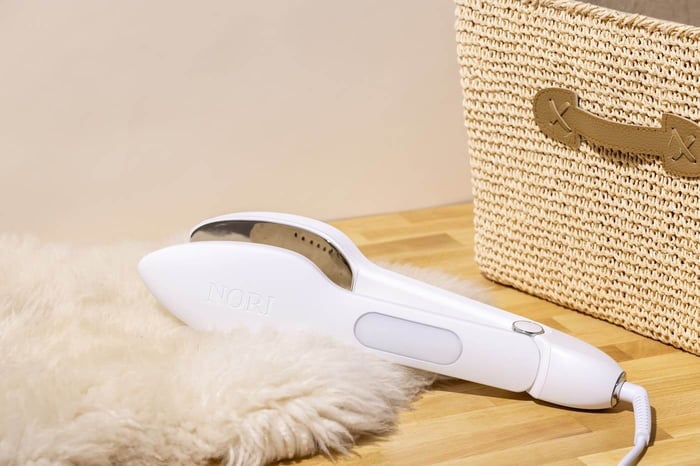
The Nori Press NPG2 is characterized by an elongated, tong-like chassis measuring approximately 14 inches in length. This dimension is critical; it allows the device to reach the center of standard garments without the user’s hand bunching the fabric—a common ergonomic failure in shorter handheld devices.
The device features two heated aluminum plates that open and close via a spring-loaded hinge, allowing the user to clamp the fabric.
Feature | Specification | Implication for End User |
Model Number | NPG2 | Second-generation iteration with refined heating algorithms. |
Weight | 1.4 lbs (635g) | Lightweight enough for extended use without arm fatigue; highly portable for carry-on luggage. |
Dimensions | ~14" Length x 2" Height x 3" Width | Fits into narrow packing cubes or shoe compartments; highly space-efficient. |
Wattage | 800 Watts | Energy-efficient; safe for limited-amperage circuits (dorms, older hotels), unlike 1500W+ steamers. |
Voltage | Dual (120V/220V - 60Hz) | Global compatibility without a voltage converter; requires only a plug adapter. |
Heat-Up Time | 3 Minutes | Slower than some steamers (40s) but ensures plates reach stable, precise pressing temps. |
Fabric Settings | 6 (Poly, Silk, Wool, Cotton, Denim, Linen) | Precision thermal control prevents melting synthetics or scorching proteins. |
Steam Duration | ~10 Minutes | Sufficient for 1-2 outfits; prioritized for spot treatment rather than bulk laundry. |
Tank Capacity | 29 ml | Extremely small; necessitates frequent refills but keeps the device weight low. |
Safety | Auto-off (10 mins) | Critical compliance feature for university housing and fire safety. |
The "Fabric Facial" and Steam Injection System
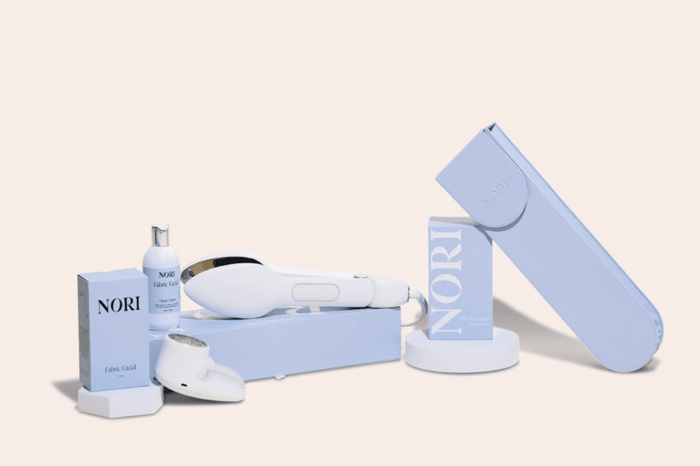
A distinguishing feature of the Nori ecosystem is the optional "Fabric Facial" steam solution, though the device functions perfectly with distilled water. The reservoir, located on the arm of the device, holds 29ml of liquid.
While critics note this capacity is low compared to the 200ml+ tanks of vertical steamers, the engineering logic prioritizes weight distribution. A heavy water tank in a handheld device creates a cantilever effect, straining the user's wrist.
By minimizing fluid volume, Nori ensures the center of gravity remains neutral, facilitating the precision required for clamping collars and plackets.
The steam emission is designed to be controlled and directional. Unlike the "plume" of a standard steamer, which saturates a wide area, the Nori injects steam directly into the fibers under pressure from the plates. This minimizes water wastage and prevents the "spitting" often associated with travel irons, provided the device is held at the correct angle and allowed to fully heat.
Comparative Competitive Analysis: Nori vs. The 2026 Field
The portable ironing market is segmented into three distinct categories: Hybrid Pressers (Nori), Traditional Travel Irons (Rowenta), and Handheld Steamers (Conair, Steamery).
1. Nori Press vs. Rowenta DA1560 (The Traditionalist)
The Rowenta DA1560 remains a standard for traditional travel irons. It features a stainless steel microsteam soleplate and a 1000-watt heating element.
Performance: The Rowenta excels at heat retention due to the mass of its stainless steel plate. For quilting or pressing heavy cottons on a flat surface, it outperforms the Nori in speed per square inch.
Logistics: However, the Rowenta requires a heat-resistant surface. In a hotel room, this often means setting up a shaky ironing board or risking damage to a desk. The Nori’s clamping mechanism eliminates this requirement entirely, allowing users to press a shirt while it hangs.
Ergonomics: The Rowenta is blocky and difficult to pack efficiently despite its folding handle. The Nori’s linear shape allows it to slide into gaps in luggage.
2. Nori Press vs. Conair Turbo ExtremeSteam (The Steamer)
The Conair Turbo ExtremeSteam (1875W) represents the high-power handheld steamer segment.
Power: The Conair draws more than double the wattage of the Nori (1875W vs 800W). While this produces a massive volume of steam, it poses a significant risk of tripping breakers in older buildings or dorms.
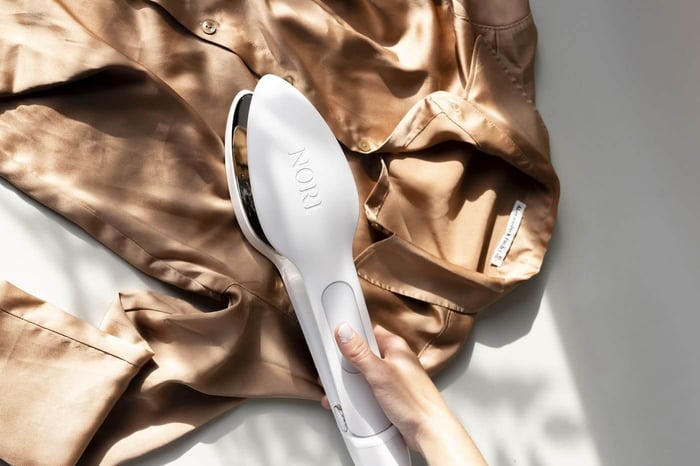
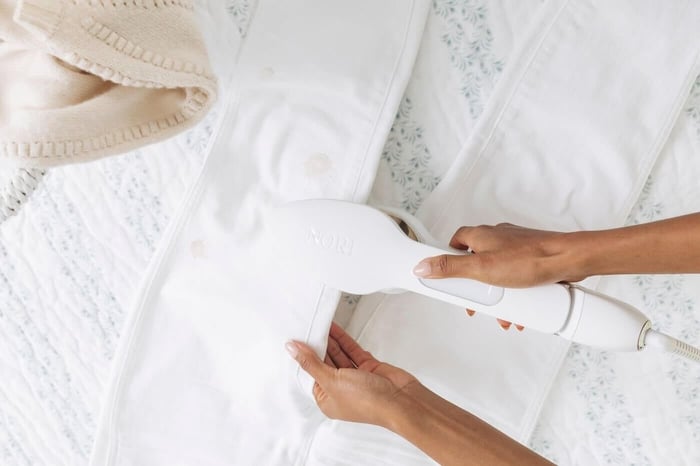
Mechanism: The Conair relies solely on steam to relax fibers. It cannot create creases. For a business traveler needing a crisp shirt collar, the Conair is ineffective. The Nori can clamp the collar to create a sharp edge, mimicking a professional laundry press.
Sanitization: Both devices claim to kill bacteria. However, the Conair’s high steam output is better suited for sanitizing upholstery or curtains, tasks for which the Nori’s small surface area is ill-suited.
3. Nori Press vs. Steamery Cirrus 3 (The Aesthete)
The Steamery Cirrus 3 is a hybrid device that combines a steamer with a heated front plate.
Design: Like the Nori, it targets the design-conscious consumer. It heats up in 25 seconds (faster than Nori's 3 minutes).
Function: While it has a heated plate, it lacks the opposing plate. Users must press the device against the garment while providing resistance with their other hand (often requiring a heat glove). The Nori’s second plate provides the necessary resistance automatically, protecting the user's hand and applying greater compressive force.
Feature Matrix Comparison
Feature | Nori Press (NPG2) | Rowenta DA1560 | Conair Turbo ExtremeSteam | Steamery Cirrus 3 |
Primary Mechanism | Dual-Plate Clamp | Soleplate Ironing | Steam Plume | Hybrid Plate + Steam |
Wattage | 800W (Low Draw) | 1000W | 1875W (High Draw) | 1200W |
Weight | 1.4 lbs | 1.6 lbs | 3.6 lbs | 1.9 lbs |
Voltage | Dual (120/220V) | Dual (120/240V) | 110V (Single) | Single Region |
Crease Creation | Excellent | Excellent | Impossible | Poor |
Board Required | No | Yes | No | No |
Travel Viability | High (Linear shape) | Medium (Bulky body) | Low (Large head) | Medium |
The Science of the "Press": Why Clamping Works
The superiority of the Nori Press is not merely a matter of convenience; it is rooted in the polymer physics of textiles.
Glass Transition Temperature (Tg) and Polymer Mobility
Textile fibers, particularly cellulosics like cotton and linen, are composed of polymer chains held together by intermolecular forces, primarily hydrogen bonds. When a fabric is wrinkled, these bonds are "set" in a disorganized state.
To remove wrinkles, one must mobilize these polymer chains. This occurs at the Glass Transition Temperature (Tg), the point where the polymer transitions from a rigid, "glassy" state to a rubbery, malleable state.
The Role of Moisture: Water acts as a plasticizer for cellulose, significantly lowering its Tg. This is why dry ironing is difficult; moisture allows the transition to occur at lower thermal energy levels.
The Role of Pressure: Once the Tg is reached and the chains are mobile, mechanical stress (pressure) is required to align the chains into a flat configuration.
The Dual-Plate Advantage
Traditional steamers lower the Tg via moisture but lack the mechanical stress component, relying only on gravity. This often leaves fabrics looking "relaxed" but not "pressed". The Nori Press applies heat and moisture to lower the Tg, and then applies immediate, direct compressive force from two vectors (the plates).
By clamping the fabric, the Nori Press maximizes thermal transfer efficiency. In a traditional iron, heat is applied to the top surface and must then be conducted through the fabric to the board.
In the Nori, heat is applied to both surfaces simultaneously.
This creates a uniform thermal environment that rapidly relaxes hydrogen bonds, allowing the compressive force to set the fabric flat before it cools and the bonds reform.
Hygiene and Safety in the Post-Pandemic Travel Era
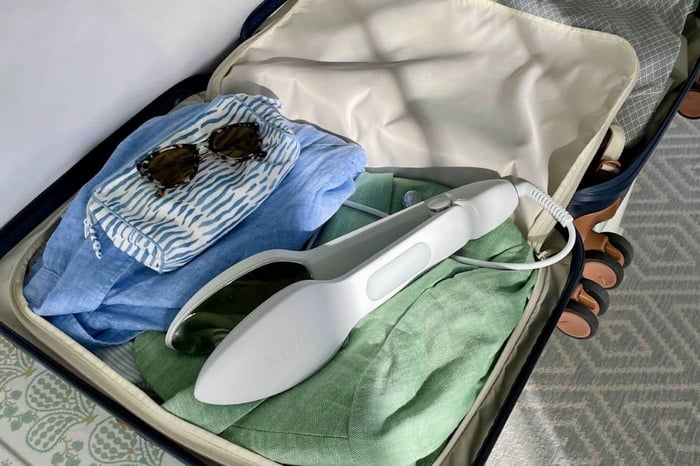
As traveler health awareness remains elevated into 2026, the Nori Press offers distinct advantages over hotel-provided amenities.
The Hazard of Hotel Irons
Frequent travelers are increasingly wary of in-room hotel irons. Reports of "iron bacteria" and biofilm accumulation in hotel irons—caused by stagnant water left in reservoirs—are common.
Furthermore, previous guests may have used the iron on inappropriate synthetic fabrics, leaving melted plastic residue or rust on the soleplate that can permanently damage expensive garments.
Bringing a personal device like the Nori Press eliminates the risk of transferring mineral deposits, rust, or unknown bacterial biofilms onto one's clothing.
Sanitization Capabilities
Steam is a proven sanitizing agent. The CDC and other health bodies note that temperatures above 167°F (75°C) are sufficient to kill most flu viruses and bacteria.
The Nori Press operates at temperatures well above this threshold, particularly on the Cotton and Linen settings (approx. 400°F-445°F). The combination of direct contact heat and steam injection allows the Nori to effectively sanitize garments, removing odors and bacteria from items that cannot be easily laundered while traveling, such as suit jackets or heavy coats.
Market Trends and Future Outlook
The rise of the Nori Press aligns with macro-trends in the 2025-2026 consumer landscape.
Sustainability and Garment Longevity: Consumers are moving away from "fast fashion" toward "slow fashion," prioritizing high-quality garments that require care. The "wash less, steam more" philosophy is gaining traction to reduce microplastic shedding and water usage. The Nori supports this by allowing users to refresh clothes without a full wash cycle.
The Digital Nomad Economy: As remote work becomes entrenched, the "digital nomad" demographic demands gear that is lightweight, durable, and multifunctional. A device that weighs 1.4 lbs and replaces both an iron and a steamer is highly attractive to this segment.
Energy Efficiency: With rising energy costs, the Nori’s 800W consumption is viewed favorably compared to 1800W station irons. It delivers targeted energy exactly where needed, minimizing waste.
Conclusion
The Nori Press represents the optimal convergence of portability, physics, and user-centric design for the 2026 landscape. While it does not have the water capacity of a dedicated steamer or the sheer surface area of a quilting iron, it outperforms both for travel and small-space living.

Its dual-plate technology allows simultaneous pressing and steaming, delivering professional-grade results on collars, cuffs, and hems that other handheld devices cannot match. For the modern traveler, the dorm-dwelling student, or the urban professional, the Nori Press is the definitive solution for garment care.
FAQs
Can the Nori Press replace a traditional iron completely?
For garment care, yes. It handles everyday clothing like shirts, pants, and dresses effectively. However, for large-scale tasks like pressing bed sheets, tablecloths, or quilting projects, a traditional iron with a large surface area is superior due to the time required to clamp small sections repeatedly.
Does the Nori Press work internationally?
Yes. The Nori Press (Model NPG2) is dual voltage (120V/220V). It does not require a voltage converter. You only need a simple plug adapter to fit the outlet geometry of the destination country (e.g., Type G for UK, Type C for Europe).
How long does the steam last?
The 29ml tank provides approximately 10 minutes of steam. This is generally enough for 1-2 garments. The small tank is a design choice to keep the device lightweight (1.4 lbs) for handheld use.
Is the Nori Press safe for silk?
Yes. The device has a specific "Silk" setting which uses low heat (approx. 300°F). It is recommended to use the steam function and avoid clamping tightly on delicate silks to prevent any potential for mechanical marking, or to test a small area first.
Can it damage clothes?
Like any heating tool, it can damage clothes if used incorrectly (e.g., using the "Linen" setting on Polyester). However, the Nori provides six clear fabric presets to mitigate this risk. It is safer than using a hair straightener, which often lacks low-temperature settings.
Why is my Nori Press "spitting" water?
Spitting usually occurs if the steam button is pressed before the device has reached full operating temperature. Ensure the indicator light has stopped blinking before activating steam. Also, using distilled water helps prevent mineral buildup that can cause leaking.
Is it heavy to hold?
At 1.4 lbs, it is lighter than most hair dryers. However, some users with limited grip strength report fatigue from the repetitive clamping motion if processing a large batch of clothes.